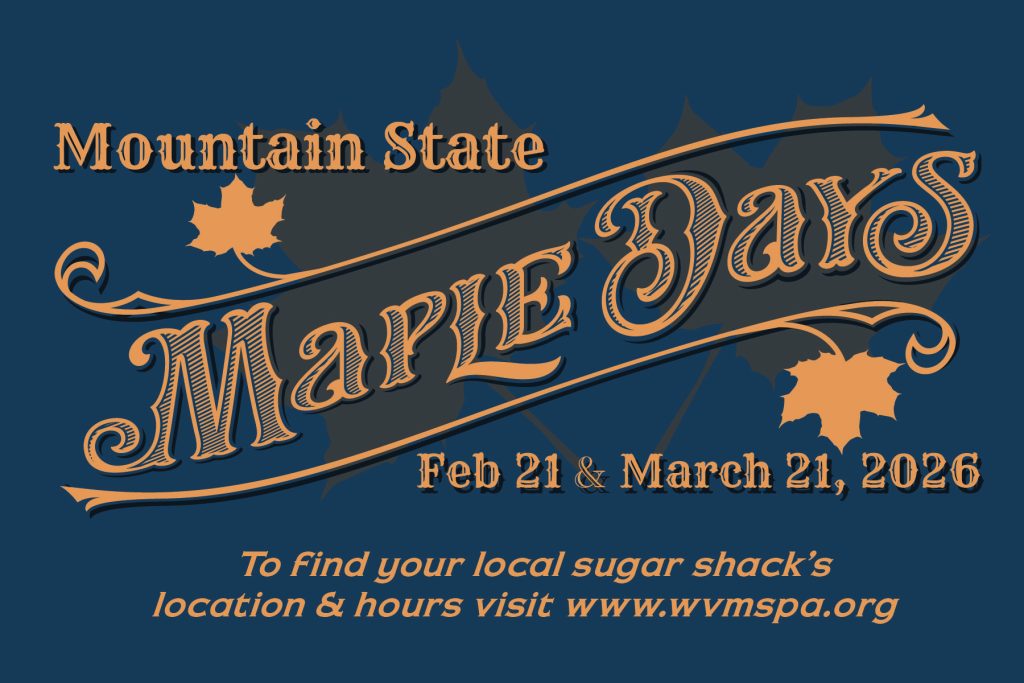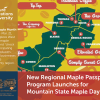

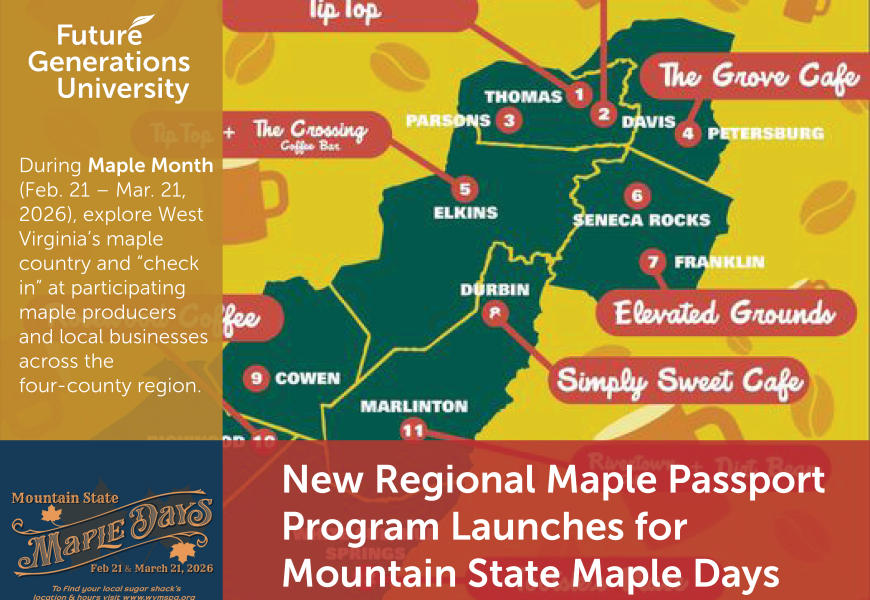

This year, Mountain State Maple Days is going regional in a brand-new way—with the launch of the Maple Passport, an interactive agritourism experience spanning Pendleton, Pocahontas, Grant, and Randolph counties.
During Maple Month (February 21, 2026 – March 21, 2026), residents and visitors will be invited to explore West Virginia’s maple country and “check in” at participating maple producers and local businesses across the four-county region. Each check-in helps participants earn points toward prizes, turning a weekend drive (or full-blown maple road trip) into a fun, rewarding adventure.
The Maple Passport is sponsored through a strong regional partnership between the Pendleton, Pocahontas, Grant, and Randolph County Convention and Visitors Bureaus, and Future Generations University, made possible through the 2023 USDA Acer Access Marketing grant.
A Quick Word on What Mountain State Maple Days Is—and Why It Matters?
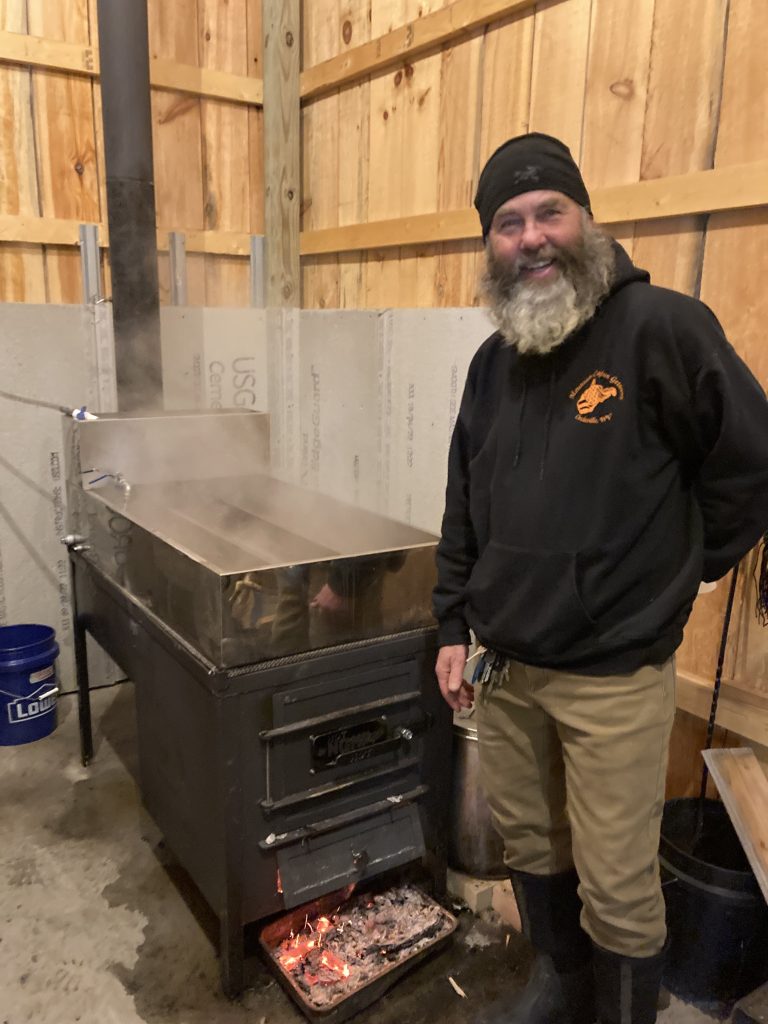
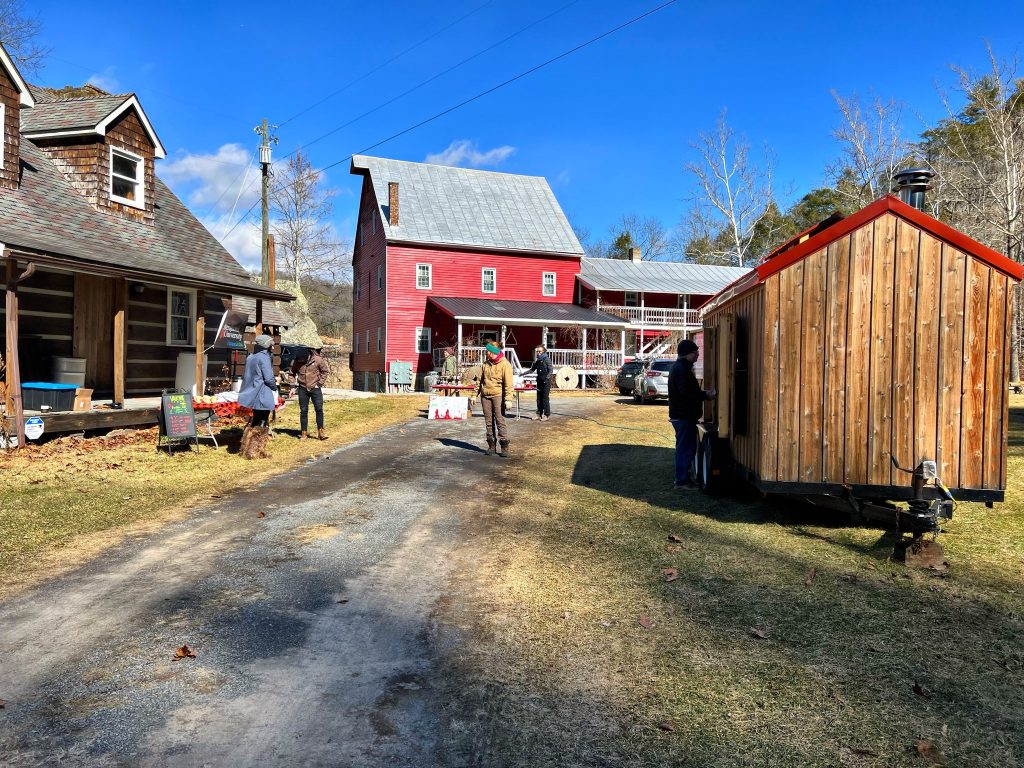
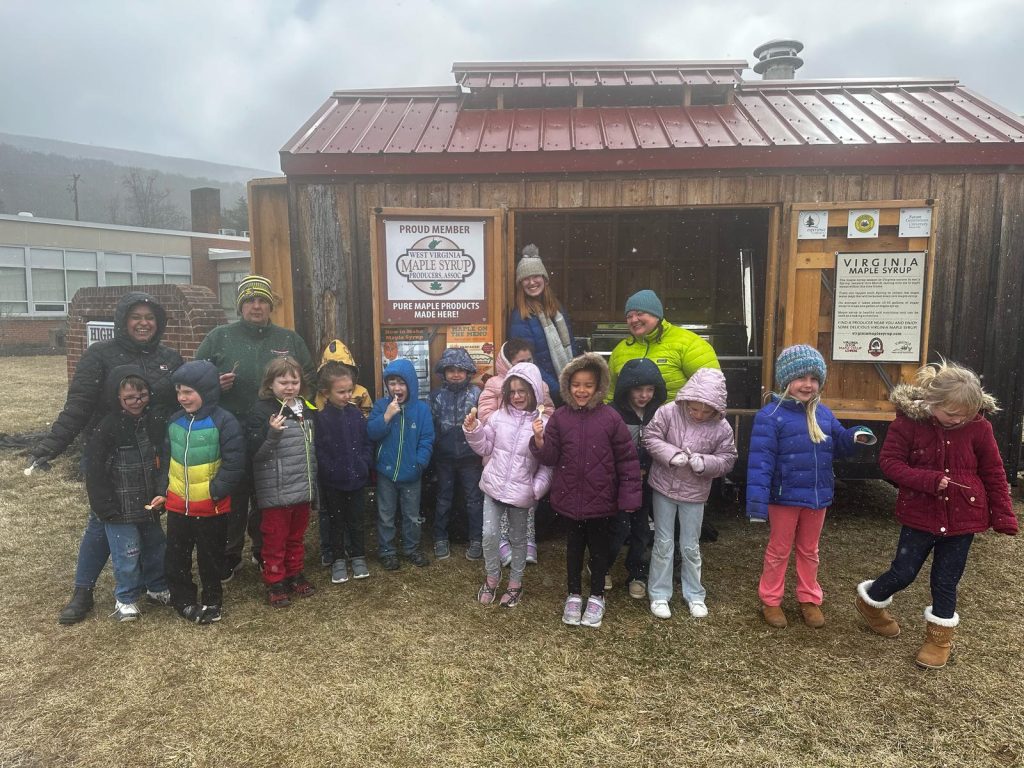
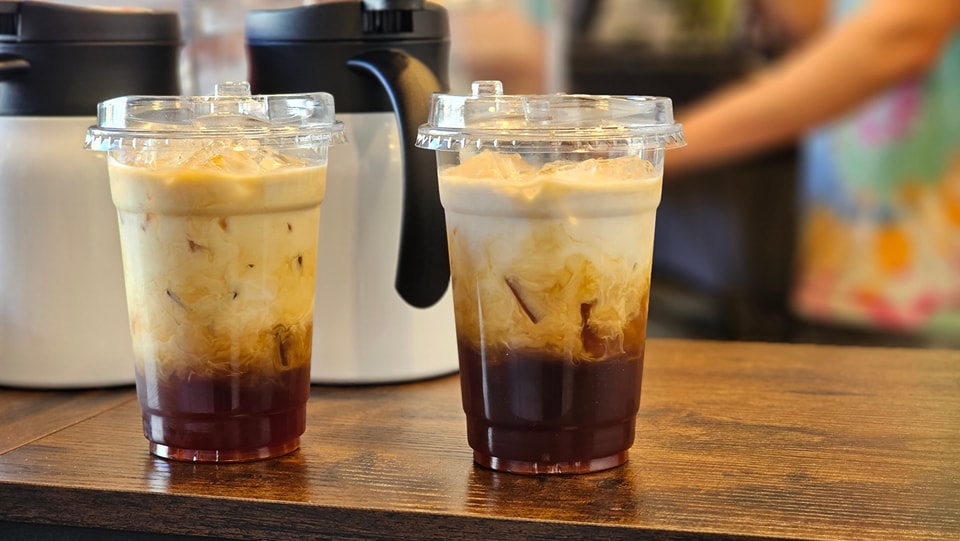
Mountain State Maple Days (MSMDs) is a statewide celebration of West Virginia maple—where sugarhouses, farms, and community partners invite the public to experience maple season up close. It’s part open-house, part educational experience, and part local shopping adventure: visitors can see how syrup is made, learn about forest and farm stewardship, and taste the many ways maple shows up in foods, drinks, and value-added products.
At its core, MSMDs is about more than syrup. It’s about strengthening place-based economies, supporting producers and small businesses, and creating reasons for people to spend time (and money) in rural communities—especially at times of year when activity tends to slow down. That’s why MSMDs has become an increasingly important platform for rural development in the region.
Why Future Generations University Cares—And What Our Role Has Been
Future Generations University’s Appalachian Program has long worked at the intersection of community development, economic resilience, and local livelihoods. In the maple world, that has meant helping producers and partners do more than “have a great product”—it has meant supporting the systems around that product: storytelling, market readiness, visitor readiness, partnership-building, and the shared regional coordination that makes agritourism work.
Over time, MSMDs has grown as a collaborative effort because the needs were clear: many producers were eager to welcome visitors, but rural communities also needed coordinated marketing, shared tools, and a bigger “reason to travel” that could lift up more than one farm at a time. Future Generations University has supported that development by helping cultivate the connective tissue—bringing partners together, translating local assets into visitor-facing experiences, and helping elevate the stories of the producers and communities that make West Virginia maple possible. From its inception, Future Generations University has partnered with the West Virginia Maple Syrup Producers Association to support agritourism efforts and assist with planning and promoting MSMD each year.
The Maple Passport as the Next Evolution of Community Development Work
The Maple Passport is the next step in that arc: a community development tool dressed up as a fun public experience (which is exactly the point). Instead of focusing on one stop at a time, the Passport strengthens the region by encouraging people to move through a network—visiting multiple producers and businesses, discovering new communities, and spreading their spending across the local economy.
This kind of design reflects the way community development actually works in real life: you don’t build resilience by spotlighting a single place; you build it by linking local efforts together so that producers, towns, and small businesses all benefit from shared visibility and shared momentum. The Passport takes what MSMDs already does well—welcoming the public into the maple story—and adds a structure that helps the experience scale across a region.
A few years ago, producers approached Future Generations University with a ‘maple trails’ idea. Through community meetings, teamwork, and the partnerships of tourism and agriculture professionals, the Maple Passport program was developed and brought to fruition during maple season 2026!
Why a Maple Passport Matters for Rural Communities
Agritourism isn’t just a feel-good buzzword—it’s one of the most practical, community-powered economic development tools rural regions have.
Programs like the Maple Passport encourage visitors to:
- travel into small towns and rural hollers they might not otherwise visit,
- spend money with locally owned businesses,
- and stay longer (which multiplies local economic impact).
A single maple stop can lead to a chain reaction: fuel at the local gas station, lunch at a nearby café, a souvenir from a Main Street shop, and maybe even a booked cabin or motel for the night. That’s how rural tourism works best—not as a single destination, but as an interconnected experience across a region.
Building Momentum During the Shoulder Season
Maple Month also lands right in what many communities call the shoulder season—the time between peak winter travel and spring tourism. For rural counties that rely on seasonal traffic, this period can be quiet, even when businesses still need steady income.
By creating a reason to travel in late February and March, the Maple Passport helps:
- boost foot traffic when towns are typically slower,
- support small businesses at a critical time of year,
- and turn “in-between season” weekends into vibrant, visit-worthy experiences.
In other words: Maple Month helps keep the economic heartbeat going when it normally starts to dip.
Partnerships at Every Level
What makes the Maple Passport especially exciting is how it’s happening: through collaboration across multiple levels of community and economic development.
This program represents a web of partnerships working together, including:
- Maple producers and forest farmers opening their sugarhouses and sharing their craft,
- Local businesses welcoming visitors and offering maple-inspired products and experiences,
- County CVBs coordinating promotion, visitor engagement, and regional tourism planning,
- and Future Generations University, supporting the project through applied community development work—helping partners align around shared goals, strengthening storytelling and visitor readiness, and using grant resources to build regional infrastructure that benefits communities long after the season ends.
And that last point is the part that’s easy to miss if you only see the Passport as a “tourism campaign.” From a university perspective—especially one rooted in applied community development—this is what impact looks like: leveraging education, partnerships, and practical tools to strengthen local economies in ways that are led by community assets and community relationships.
A Sweet Invitation
The Maple Passport is more than a prize program—it’s an invitation to explore West Virginia’s maple heritage, meet the producers behind the syrup, and experience the region through food, tradition, and community connection.
As Maple Month approaches, keep an eye out for participating locations, check-in details, and prize announcements. Whether you’re a lifelong West Virginian or a first-time visitor, the Maple Passport makes it easier—and more fun—to discover why maple season is one of the most delicious times of year in the Mountains.
Let’s make Maple Month 2026 a reason to travel local, support rural, and celebrate the people and places that make West Virginia’s maple story possible. 🍁