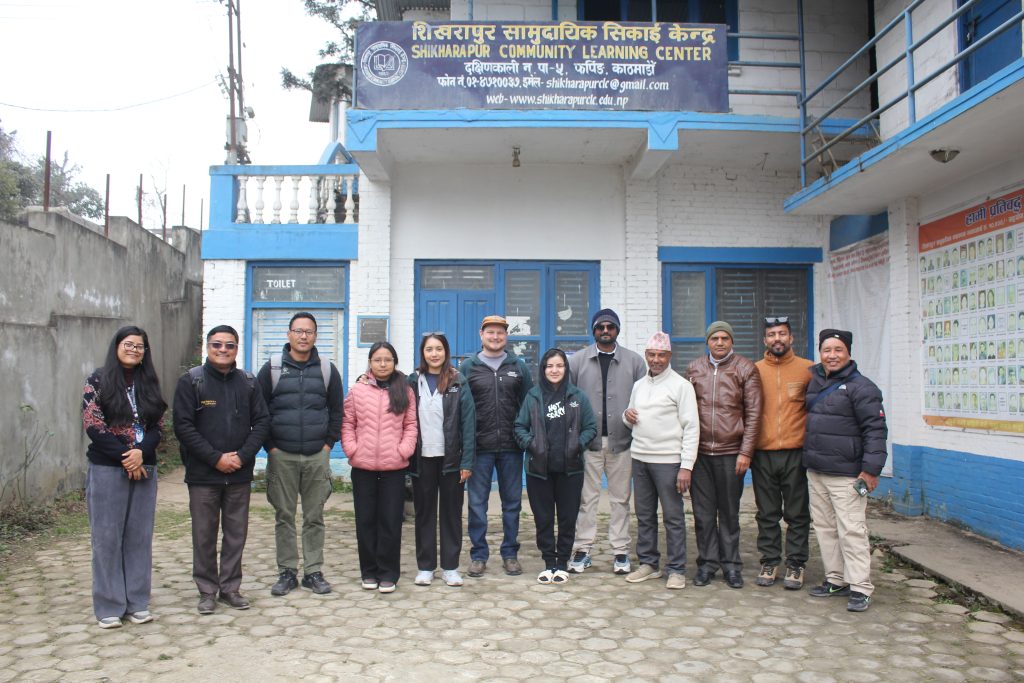

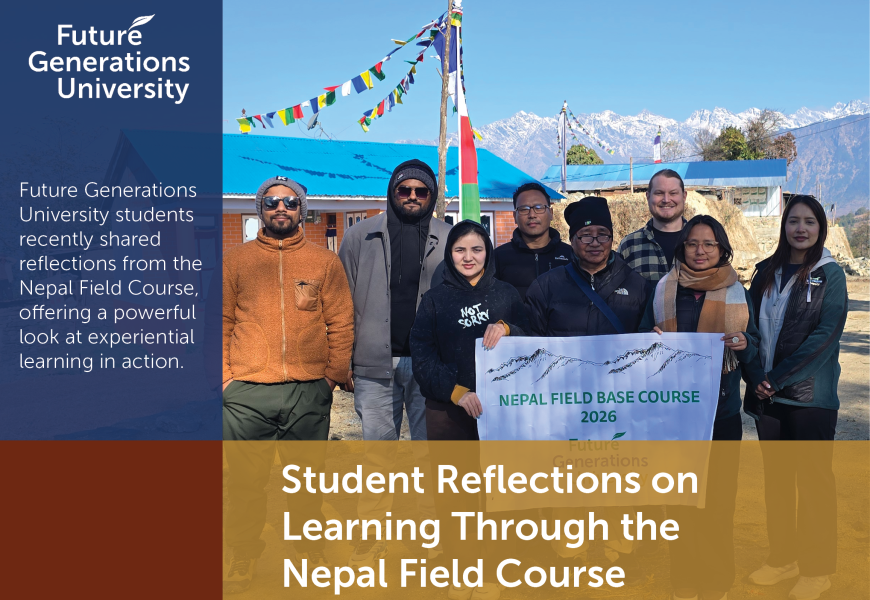
Future Generations University students shared reflections from the Nepal Field Course, offering a window into what experiential learning looks like when classroom concepts are tested—and strengthened—through real-world engagement. Facilitated by faculty Nawang S. Gurung and Surendra Gurung, the students emphasized a consistent theme: meaningful development begins by recognizing what communities are already doing well and building from there.
Throughout the course, students experienced a deliberate integration of theory, practice, and reflection. A recurring lesson emphasized across site visits and faculty guidance was the importance of humility and openness in community engagement. Students learned that effective development does not start with solutions, but with listening, observation, and respect for local context.
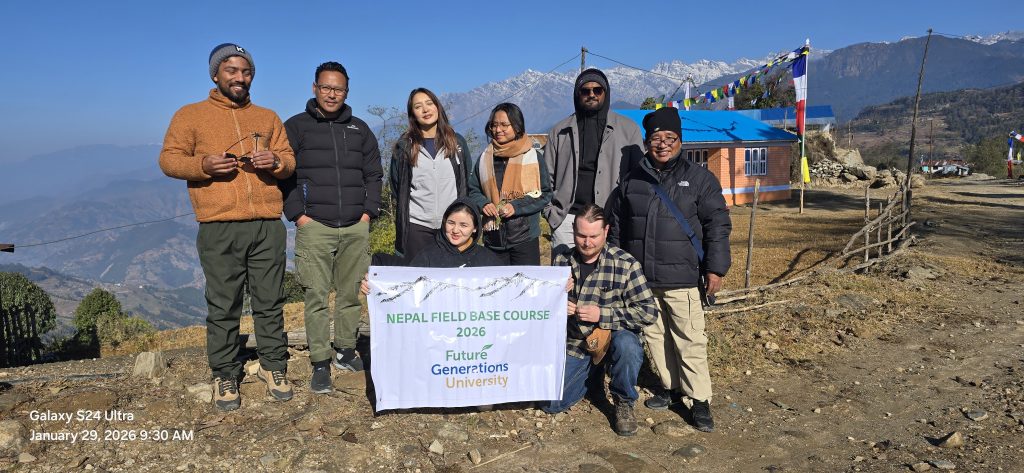
Through site visits to community organizations, social enterprises, research institutions, farms, and climate-adaptive infrastructure—including Paradise Hills Social Enterprise, women’s leadership networks in Nuwakot District, the International Centre for Integrated Mountain Development (ICIMOD), Himgiri Permaculture Farm, climate-adaptive rammed earth homes, the VDRC cooperative and governance model, and locally rooted market initiatives such as the Arc Bazaar—students saw firsthand how community-led development principles translate into sustained, real-world impact.
Across Nepal, students visited social enterprises, women-led groups, climate-adaptive infrastructure, farms, research centers, and cooperative organizations. Most of the groups and community-based organizations they encountered no longer depended on outside actors; instead, they set their own priorities, managed their finances, and resolved challenges collectively.
Across these experiences, students are already integrating lessons into their professional and community work—from agroecology and climate adaptation to social enterprise, governance, and women’s leadership.
Learning Beyond the Classroom: “Observe Without Judgment”
For Aarju Bhandari and Kachhiya Shivam, the field course reinforced an approach they learned through visits to community-led initiatives and conversations with local leaders: entering communities not as experts, but as learners.
“One thing that we have learned… is that whenever we enter a community, we don’t go as an expert,” Aarju shared. “We go to learn with an empty notebook, an empty mind, and then we observe without judgment.”
Students repeatedly encountered a core principle throughout the course: lasting change begins by building on what already works. Rather than focusing first on gaps or deficiencies, they were encouraged to identify existing strengths, successful practices, and local leadership already in motion.
This mindset was shaped through visits to women’s leadership groups in Nuwakot District and social enterprises such as the Arc Bazaar in Pokhara, where locally produced goods are marketed to support community livelihoods. These experiences demonstrated how sustainable development emerges when local knowledge, leadership, and institutions are recognized, respected, and strengthened—not replaced.
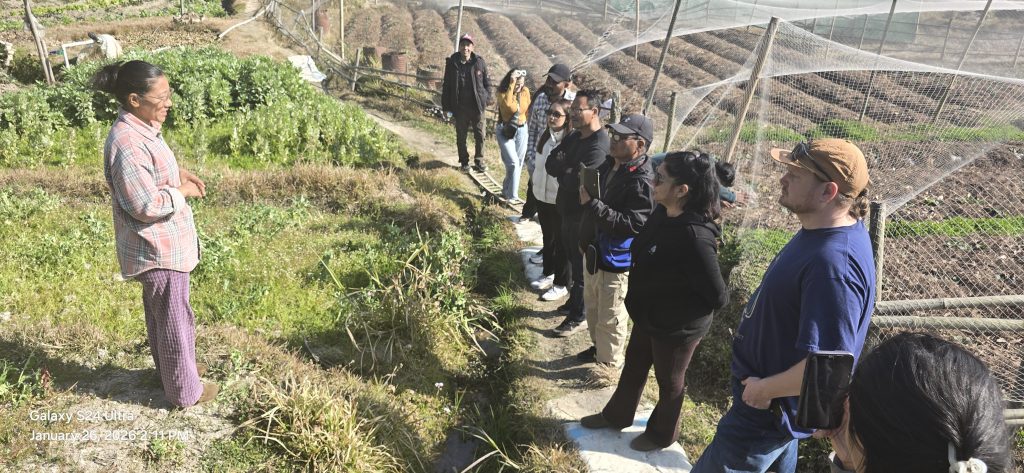
Women’s Groups and Local Ownership: Leadership That Rotates and Sustains
A particularly powerful learning experience came from visiting women’s leadership networks in Nuwakot, where students observed groups that had transitioned from NGO-supported programs to fully independent community institutions.
Mastura Pakbin Alizada reflected on how these groups intentionally build leadership capacity by rotating leadership roles among members.
“One woman shared… they are choosing a new leader after two years,” Mastura explained, noting that this approach “gives opportunity for everybody to lead the communities.”
Students saw how these groups had moved beyond reliance on external funding, developing their own governance structures, financial systems, and program priorities. “They believed local ownership… will be the cause of sustainability, especially long-term sustainability,” Mastura said.
The most impactful learning moments came directly from the field—particularly observing the successful transition from NGO-supported initiatives to fully independent organizations. Students witnessed how confidence deepened, collective responsibility strengthened, and institutional resilience took root once communities assumed full ownership of their processes.
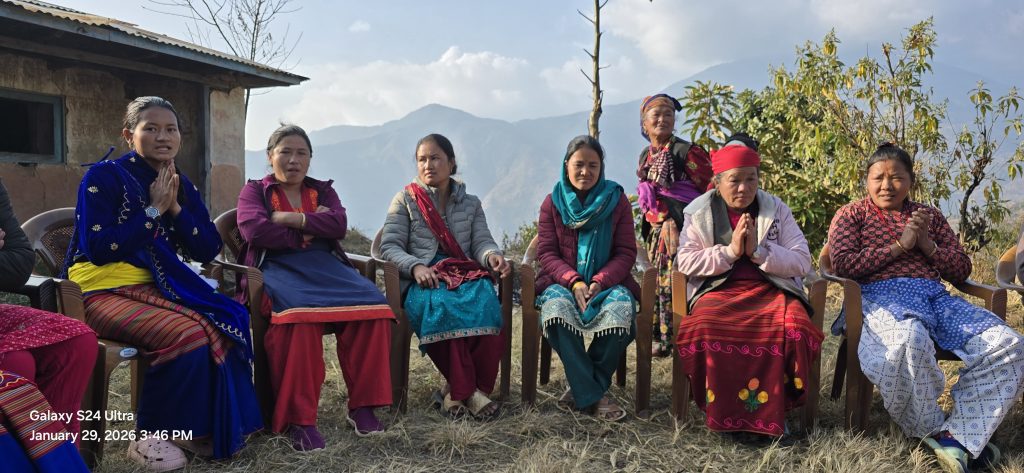
Climate Adaptation in Practice: Integrated Solutions at the Household and Landscape Level
Visits to climate-adaptive homes and research institutions brought the concept of holism into clear focus. At a rammed-earth climate-adaptive home constructed using locally available materials, students saw how housing design integrated environmental sustainability, health, and economic accessibility.
“They had integrated beautifully the health, housing, and agriculture as a whole,” Aakash Tiwari shared.
At the International Centre for Integrated Mountain Development (ICIMOD), students explored demonstration sites featuring renewable energy systems, agroforestry models, and climate-resilient agriculture. These systems illustrated how traditional ecological knowledge and scientific innovation can work together to strengthen resilience in mountain communities.
For Aakash, whose work focuses on agroecology, these experiences directly informed his plans to integrate forest-based farming systems into his own community. “In rural regions, one of the major resources is the forest resource,” he explained.
Through these visits, students observed how strengthening local institutions—whether women’s networks, farms, or research centers—builds long-term resilience that extends beyond individual projects. They saw that sustainability is not a short-term outcome but an ongoing process rooted in community leadership and adaptive capacity.
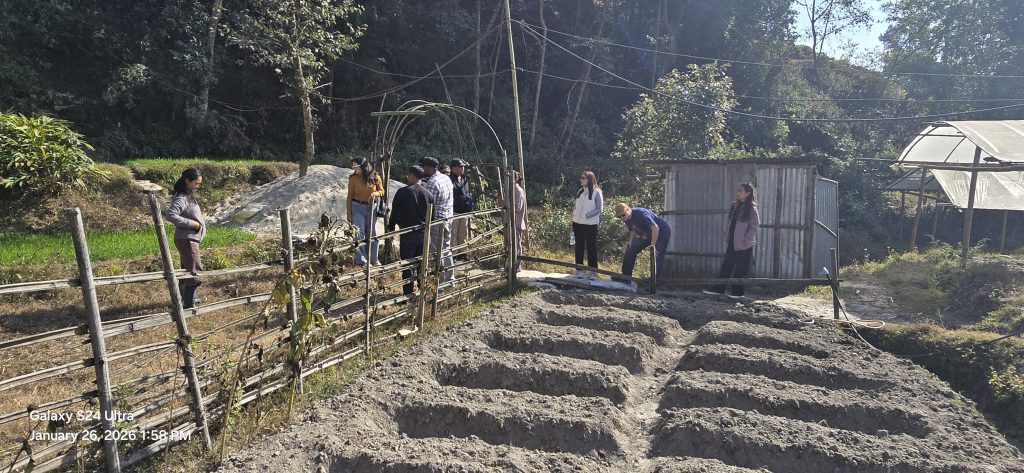
Sustainable Agriculture and Livelihoods: Learning from Working Farms
At Himgiri Permaculture Farm, students observed how sustainable agriculture can provide both environmental benefits and dignified livelihoods.
“It proved that agriculture can provide a sustainable and dignified livelihood,” Sujata Gharti reflected.
These lessons were reinforced at community markets and social enterprises such as Arc Bazaar, where local agricultural products are purchased, promoted, and sold, helping farmers access stable markets and reducing economic vulnerability.
Students experienced how economic empowerment becomes sustainable when producers control market access, decision-making, and financial management—further reinforcing the principle that development thrives when local systems are strengthened from within.

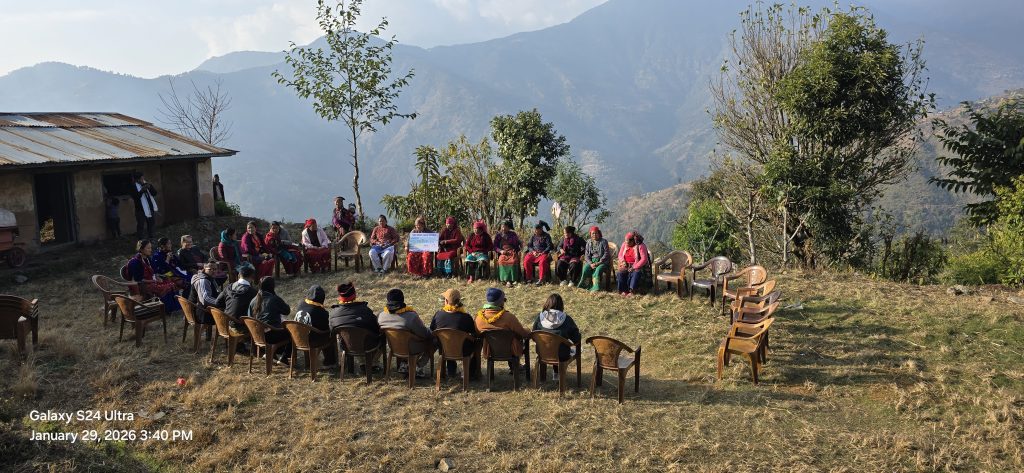
Governance and Institutional Sustainability: Lessons from VDRC and Community Organizations
Students also visited VDRC, a long-standing community development organization that integrates cooperative banking, governance training, and community enterprise support.
Sujata emphasized how observing VDRC’s leadership rotation and partnership model strengthened her understanding of sustainable governance.
“I have planned an orientation meeting with the local governments of the area where I’m working,” she shared.
Casey Withers reflected on how seeing these models in practice deepened his understanding of development principles learned in the classroom.
“This has really helped solidify what a lot of these words truly mean… because being able to see it practically will put it more experiential in your face,” he said.
He also noted a shift in his understanding of empowerment. “If you can get somebody to kind of take self-ownership of their own life… a lot of that dignity comes from income generation and being able to support yourself.”
The experience reshaped students’ understanding of empowerment—not as a one-time intervention or external input, but as a continuous process of capacity-building, shared vision, and collective responsibility that they now carry back into their own communities.
Applying Learning Immediately: From Climate Education to Digital Innovation
Students emphasized that the Nepal Field Course is not simply an academic experience—it is shaping their real-world work today.
Mastura is applying lessons from community-led education models to expand online learning opportunities for Afghan girls, emphasizing inclusivity, sustainability, and community ownership.
Aarju is launching a youth-driven climate and social innovation platform, inspired by the climate adaptation technologies and youth engagement models she observed.
In each case, students are translating field-based insights into locally grounded action—demonstrating how experiential learning equips them not just to understand development theory, but to apply it thoughtfully and sustainably in their own contexts.
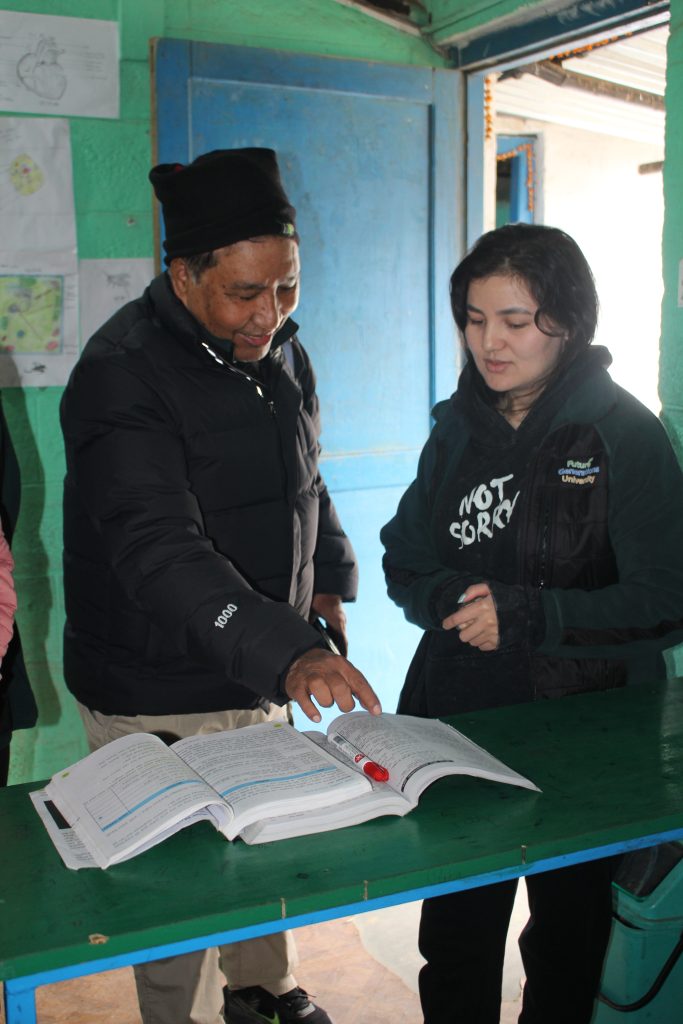
A Model of Applied Learning
Faculty member Nawang S. Gurung highlighted how the Nepal Field Course reflects the University’s core approach to experiential learning.
“All the students have the three key underlying learnings,” he said: “What you learn, how you learn, and what you apply back home.”
The Nepal Field Course demonstrates how immersive, community-engaged education—grounded in humility, local leadership, and building on success—equips students not only with knowledge, but with the perspective and practical tools to support lasting, community-led change.