
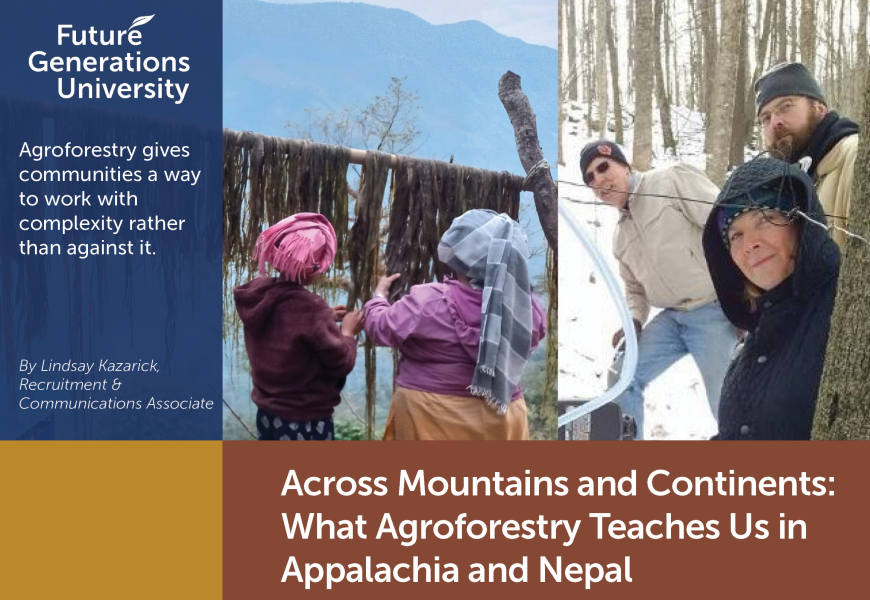
Forests are more than scenery. For communities blanketed in forest landscapes, they are a classroom, a pharmacy, a food system, a water protector, a wildlife habitat, world-serving ‘lungs,’ and a holder of cultural memory. And, when cared for with intention, forests are regenerative sources of livelihoods.
That truth is visible in two very different places connected by similar questions: the hills of Appalachia and the mountain communities of Nepal. The landscapes are separated by oceans, language, climate, and culture, but they share a powerful reality: many people are seeking ways to remain in the places they call home, even as limited economic opportunities often pressure younger generations and working families to leave in search of income elsewhere. In both regions, communities are looking to forests not simply as resources to extract, but as living systems that can sustain livelihoods, strengthen local economies, preserve cultural connections to place, and protect biodiversity for generations.
Reading the Whole Forest, Growing Whole Communities
At Future Generations University, this work is reflected in the Appalachian Program’s Reading the Woods initiative, an open-source, web-based information center designed to help technical service providers support West Virginia woodland stewards through whole-woods assessments, production planning, enterprise tools, resource libraries, and agroforestry production and cost calculators. The program grows from a simple but transformative idea: before a woodland enterprise can succeed, communities must understand the whole forest—the ecological conditions, the economic possibilities, and the human goals shaping each decision.
In Appalachia, this approach is especially important. West Virginia has more than twelve million acres of forest covering roughly 78% of the state, creating vast opportunities for agroforestry practices that are both ecologically and economically beneficial. Yet woodland stewards often need support turning that potential into practical, sustainable enterprises. Reading the Woods responds by helping service providers and landowners look beyond a single crop or product and toward a broader nature-based enterprise landscape—one that may include maple syrup, walnut syrup, forest botanicals, mushrooms, riparian crops, eco/agritourism, and other non-timber forest products.
The Reading the Woods framework encourages people to ask deeper questions before jumping into production: What does success mean for this woodland steward? Is the goal supplemental income, family tradition, environmental stewardship, food production, market development, or keeping land intact for the next generation? The program names three essential parts of any nature-based enterprise: the environmental conditions of the land, the economic realities of the enterprise and market, and the social conditions of the farmer and community. That last piece—the human one—is often where the real story lives.
Conservation and Community Livelihoods Growing Together
That same human-centered approach is visible in agroforestry work taking place in Nepal through Future Generations University, Future Generations Himalaya, and The East Foundation. There, agroforestry initiatives have focused on enhancing household income, strengthening environmental conservation, encouraging community participation in natural resource management, and reducing pressure on forest resources through sustainable, tree-based livelihood practices.
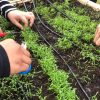
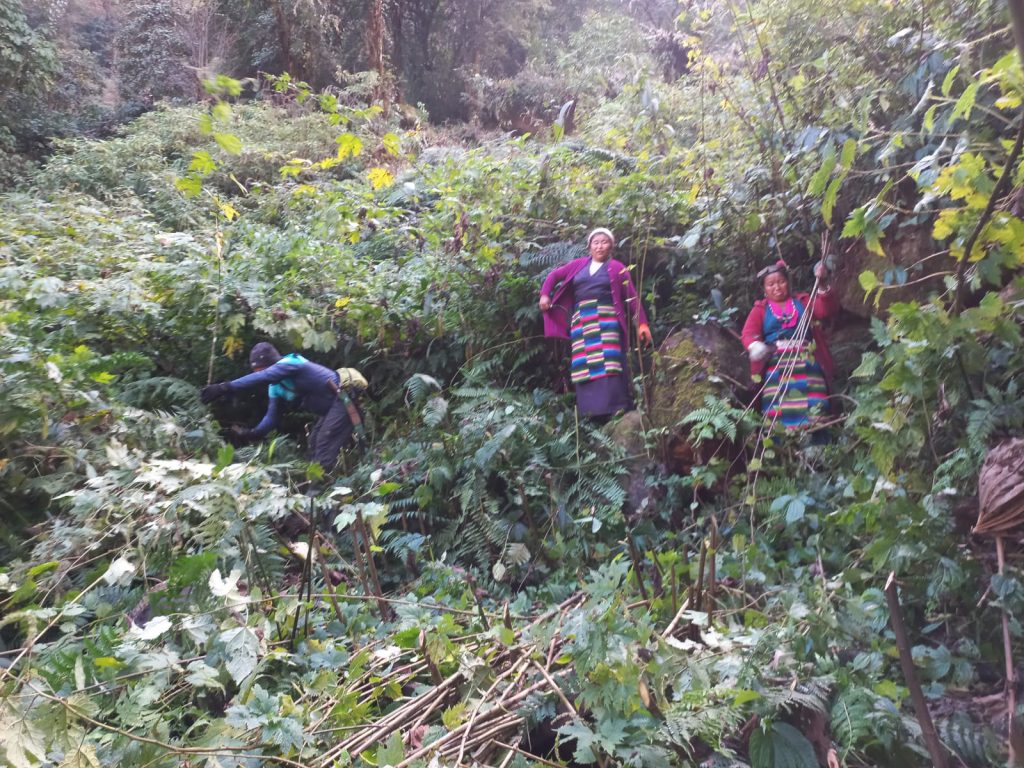
In Nepal, the work is rooted in practical, locally meaningful activities. Mothers and women’s groups have participated in nettle cordage-making training, learning the process of sustainable harvesting, drying, baking, beating, fiber extraction, and spinning nettle into cordage. The goal is not only to preserve traditional knowledge, but to create income-generating opportunities through collective production and possible commercialization of nettle products.
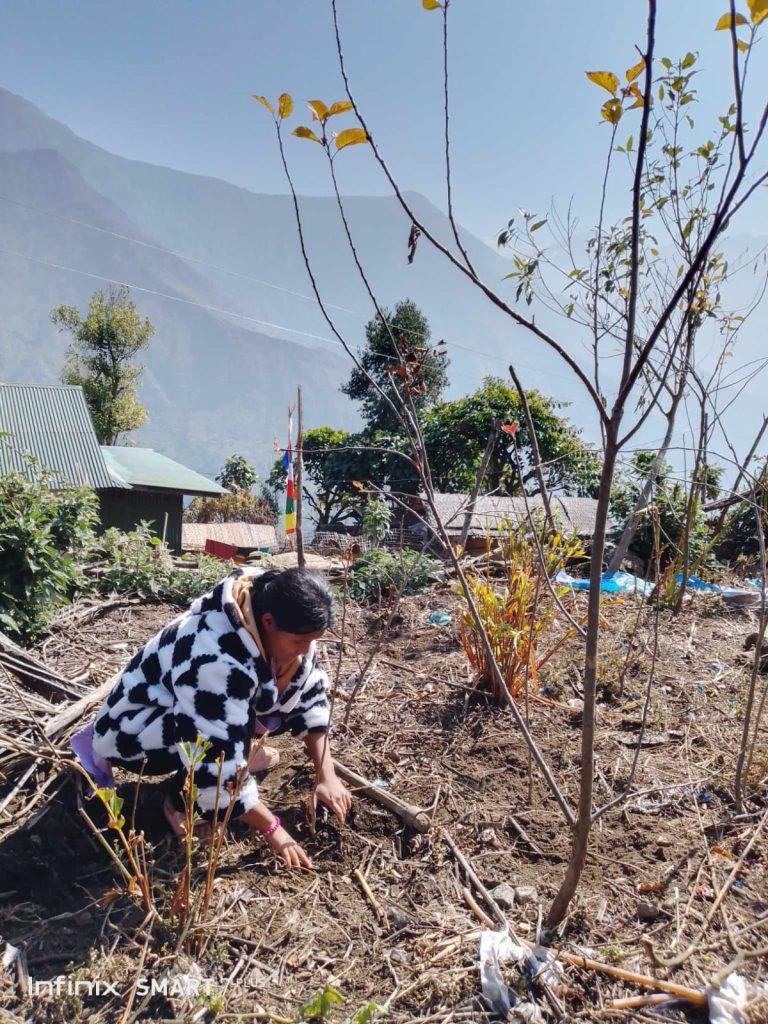
Fruit tree planting has also become part of the agroforestry strategy, with saplings such as apple, walnut, apricot, and pear distributed through Forest User Groups to youth groups, women’s groups, and local farmers. These plantings are intended to support food security, diversify household income, improve soil conservation, and encourage climate-resilient farming. The work also produced an important local lesson: fruit trees planted on private land were more successful than those planted in community forests because they experienced less damage from wild animals.
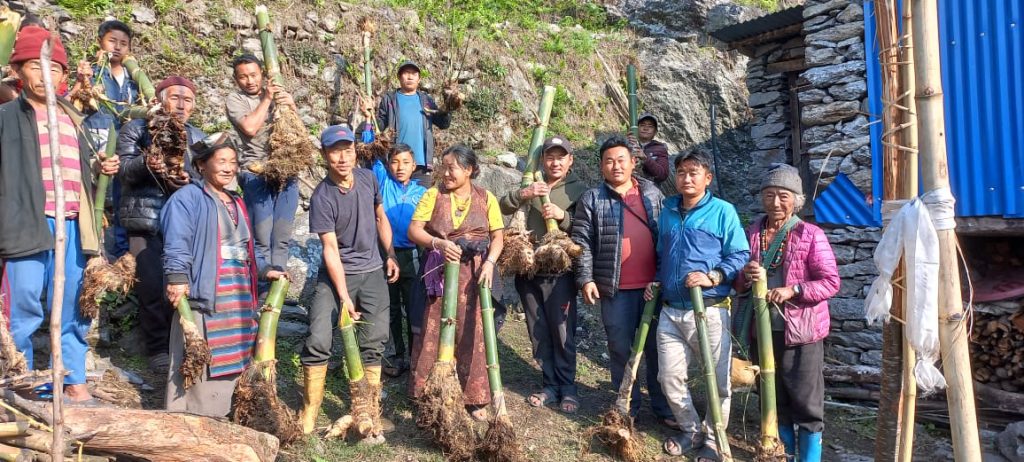
Bamboo planting offers another example of agroforestry as both environmental practice and community process. Bamboo supports soil stabilization, carbon absorption, degraded land restoration, household use, and income generation. But in one community, the work also raised cultural concerns because some senior community members believed unmarried youth should not plant bamboo. Rather than dismissing that belief, the project became an opportunity for intergenerational dialogue. Youth became motivated to participate, elders helped lead the planting, and the activity strengthened local ownership. Sometimes the strongest root system is the conversation that happens before the shovel hits the ground.
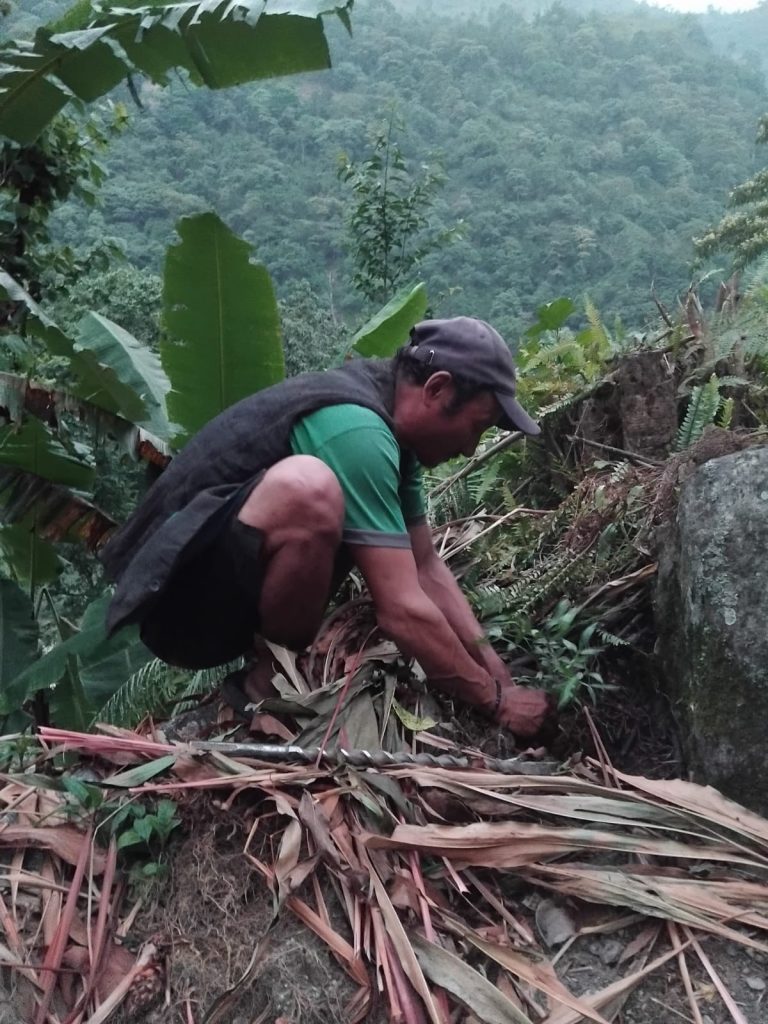
Black pepper farming has also been introduced as an income diversification strategy because it may be less vulnerable to wild animal damage than other crops. While results have varied due to unpredictable weather and the challenges of higher-altitude farming, successful plots have shown promise for future production, income generation, and climate-appropriate farming practices.
Different Forests, Shared Roots
The bridge between Appalachia and Nepal is not that the same crops are being grown, or that the same model can be copied from one mountain region to another. In fact, the opposite is true. The strongest connection is the shared commitment to place-based adaptation.
In Appalachia, Reading the Woods asks woodland stewards and technical service providers to assess the forest, the market, and the human story before choosing an enterprise. In Nepal, communities are doing the same kind of adaptive work through locally available resources such as nettle, bamboo, fruit trees, and black pepper. In both places, agroforestry is not a one-size-fits-all solution. It is a process of listening carefully to the land and people.
Both regions also show that agroforestry is not just an agricultural practice. It is community development.
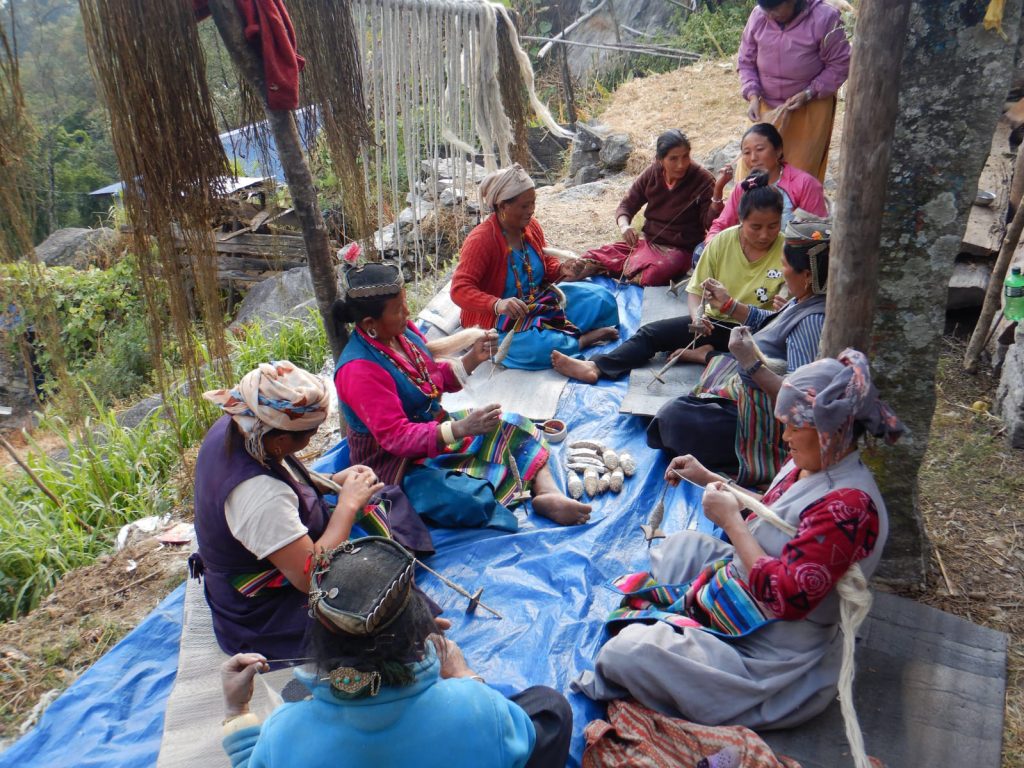
It involves women’s groups building economic capacity. It involves youth learning that conservation can be active, practical, and future-facing. It involves elders sharing cultural knowledge. It involves service providers helping landowners see possibilities in landscapes that may have been overlooked. It involves families and communities asking how forests can provide income without losing biodiversity, tradition, or long-term ecological health.
This is where the work in Nepal and Appalachia becomes most closely aligned. Both efforts move away from the idea that forests are valuable only when timber is removed or land is cleared. Instead, they ask: What if the forest itself is the foundation of a resilient local economy?
In Appalachia, that question may lead to maple syrup, walnut syrup, forest botanicals, mushrooms, or agritourism. In Nepal, it may lead to nettle fiber, bamboo, fruit trees, or black pepper. The products differ because the places differ. But the underlying values are deeply familiar: stewardship, livelihood, biodiversity, cultural continuity, and community ownership.
Agroforestry gives communities a way to work with complexity rather than against it. It recognizes that land is ecological, economic, and social all at once. A forest is not only a stand of trees. It is a living relationship between soil, water, plants, wildlife, markets, memory, labor, and hope.
Global Lessons in Resilience
Across Appalachia and Nepal, that relationship is being strengthened through practical action: planting trees, training producers, assessing forest potential, building enterprise tools, preserving traditional knowledge, and creating income opportunities that do not require communities to choose between conservation and survival. This is exactly the kind of work Future Generations University was created to support. FGU’s history began with a global question first advanced through a UNICEF task force: how can communities create sustainable impact, and how can that impact grow without losing local ownership? Through applied research across places including Tibet, China, Peru, India, Afghanistan, Canada, Haiti, and the United States, Future Generations helped shape SEED-SCALE, a method of community development designed to be both locally adaptable and globally relevant.
That history matters because mountainous communities are too often treated as remote, marginal, or resource-limited, when in reality they hold deep ecological knowledge, cultural strength, and practical solutions for living with the land. From the Himalayas to the Alleghenies, the challenge is not simply how to “bring development” to mountain communities, but how to recognize, strengthen, and scale what communities are already doing well. Future Generations University is uniquely positioned to help tell this story because its work has never been limited to the classroom. Its mission centers on research, learning, and action for inclusive and sustainable community change worldwide, with a stated commitment to prioritizing vulnerable and marginalized communities, conserving Earth’s systems, expanding opportunity, and scaling locally grown successes.
FGU’s authority in this field is rooted in lived practice across mountain landscapes. Its headquarters on North Mountain in Franklin, West Virginia, places the University within a rural Appalachian landscape shaped by forests, headwaters, agricultural heritage, and the realities of economic transition. At the same time, the Future Generations legacy includes decades of community-based conservation and development work in the Everest region, where local communities helped advance conservation while improving the quality of life in one of the world’s most iconic mountain environments.
In both places, the work points to the same lesson: sustainable community development cannot be separated from land, livelihood, culture, and local leadership. Whether supporting agroforestry and forest-based enterprise in Appalachia or learning from community conservation and mountain livelihoods in Nepal and the greater Himalayan region, Future Generations University brings a long-standing, place-based understanding of how marginalized mountain communities can lead their own futures. This is not theory reaching down into rural places; it is applied education growing from them.
The work happening on these two continents reminds us that sustainable development does not begin with a template. It begins with attention.
Read the woods. Listen to the community. Honor what is already there. Then build from the roots up.