
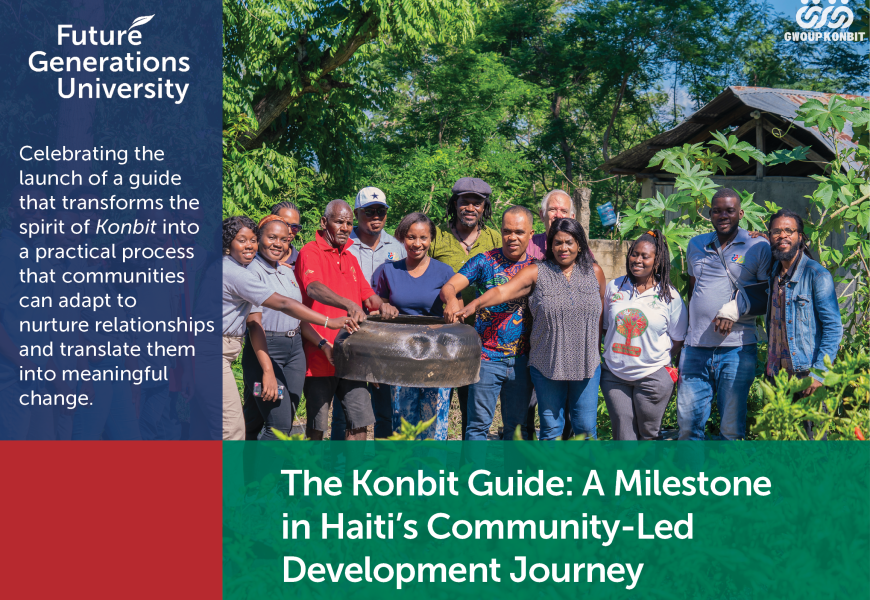
The term “Konbit” is a distinctly Haitian principle – a Haitian Creole word for cooperation; embodying the concept of ‘the practice of many people coming together to accomplish what cannot be achieved alone.’
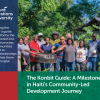
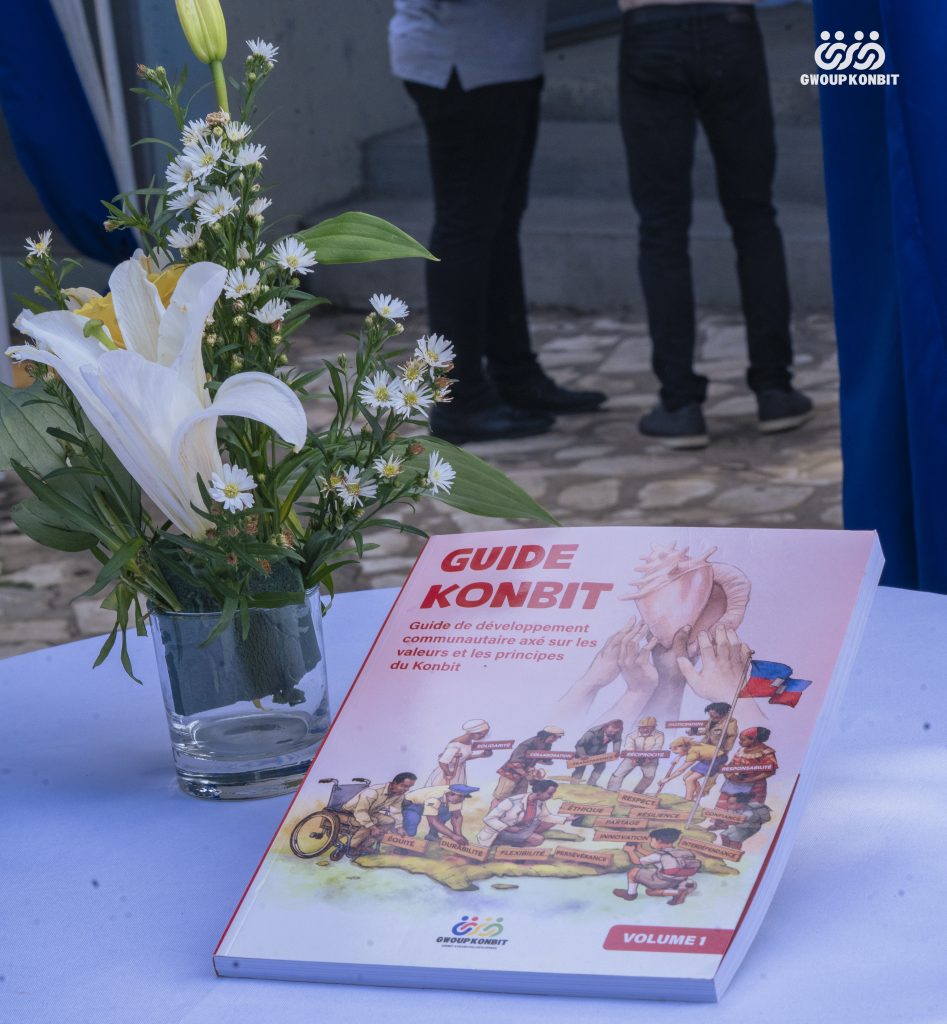
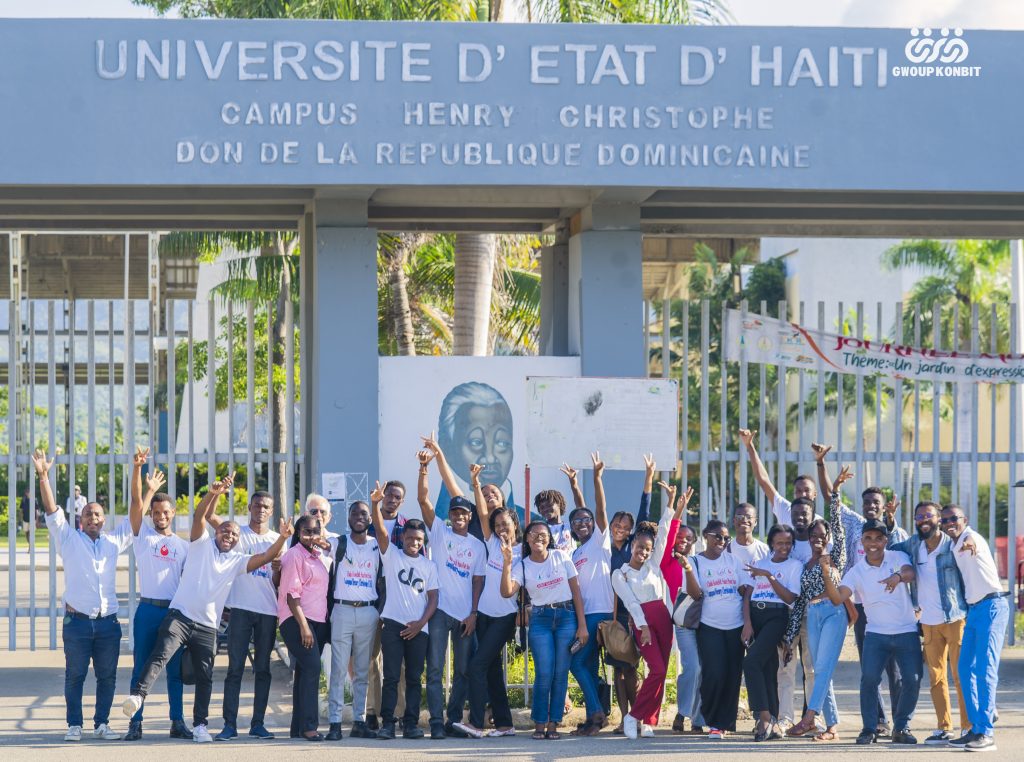
In May 2026, many people came together in Haiti – community leaders, educators, development practitioners, students, alumni, and partners – to celebrate the launch of the Konbit Guide: A Community Development Guide Based on the Values and Principles of Konbit. More than a celebration of the release, this event marked a significant milestone in a fifteen-year journey to strengthen this intrinsically Haitian approach to community-led development.
The guide represents the contributions of more than 300 community leaders from across Haiti who shared experiences, stories, reflections, and lessons learned through years of working within communities. Through a participatory process, these leaders helped articulate how the traditional Haitian practice of Konbit can serve as both a cultural value and a practical framework for development.
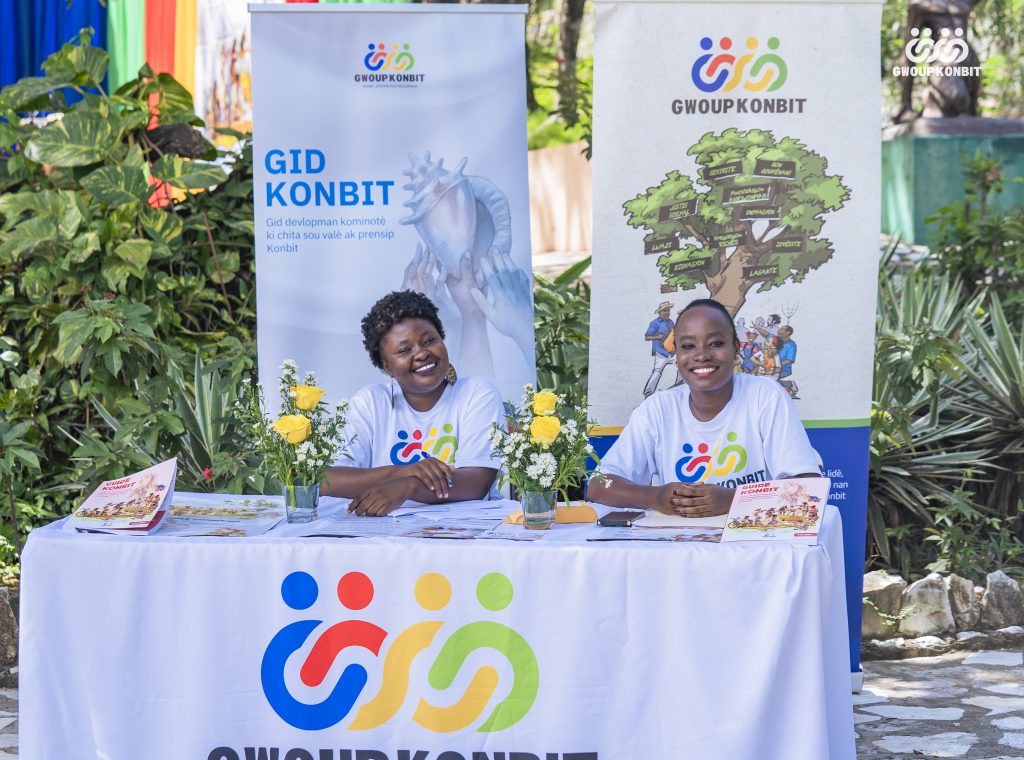
The launch was not simply the unveiling of a new resource. It was evidence of something much larger: Haiti has spent the last fifteen years building a community-led development movement grounded in local leadership, mutual support, and collective action. And they did so in one of the most challenging environments for community change in the world.
Haiti’s Development Journey: Challenges and Possibilities
Haiti’s development story is often told through the lens of crisis. Natural disasters, political instability, economic hardship, and social challenges have shaped international perceptions of the country over decades and centuries. While these realities are significant, they tell only part of the story.
Less frequently highlighted are the countless examples of resilience, innovation, and community leadership that emerge across Haiti every day. In communities throughout the country, local leaders continue to organize, solve problems, support one another, and create opportunities despite difficult circumstances.
The Konbit tradition reflects this history of resilience. Long before modern development programs existed, Haitians practiced forms of collective action that allowed communities to cultivate fields, build homes, share labor, and support one another during times of need. These practices created social bonds and systems of mutual support that remain deeply embedded in Haitian culture.
The Konbit Guide builds upon this foundation. Rather than introducing an external model of development, it documents and strengthens approaches that already exist within Haitian communities. In doing so, it offers a vision of development that recognizes Indigenous and local knowledge, values community leadership, and places people—not projects—at the center of change.
Konbit: More Than Collective Labor
One of the guide’s most important contributions is its reframing of Konbit as more than a traditional form of collective labor. The guide traces Konbit’s roots from West African communal traditions through slavery, maroon communities, the Haitian Revolution, post-independence solidarity movements, and contemporary grassroots organizing.
In doing so, it presents Konbit not as a relic of the past, but as a living philosophy rooted in solidarity, mutual aid, shared responsibility, and collective action. The guide argues that these principles have shaped Haitian society for generations and continue to offer relevant solutions to modern challenges.
This perspective challenges the assumption that development solutions must come from outside communities. Instead, it highlights how cultural traditions and local knowledge can serve as foundations for innovation, resilience, and social transformation.
From Konbit Soley Leve to a National Movement
For many participants, the launch represented an opportunity to reflect on how far the movement has come.
The story traces back more than fifteen years to the emergence of Konbit Soley Leve in Cité Soleil, where a small group of young community leaders began exploring how collective action could address local challenges and strengthen their communities. What began as a local initiative gradually expanded as leaders connected across regions, shared experiences, and learned from one another.
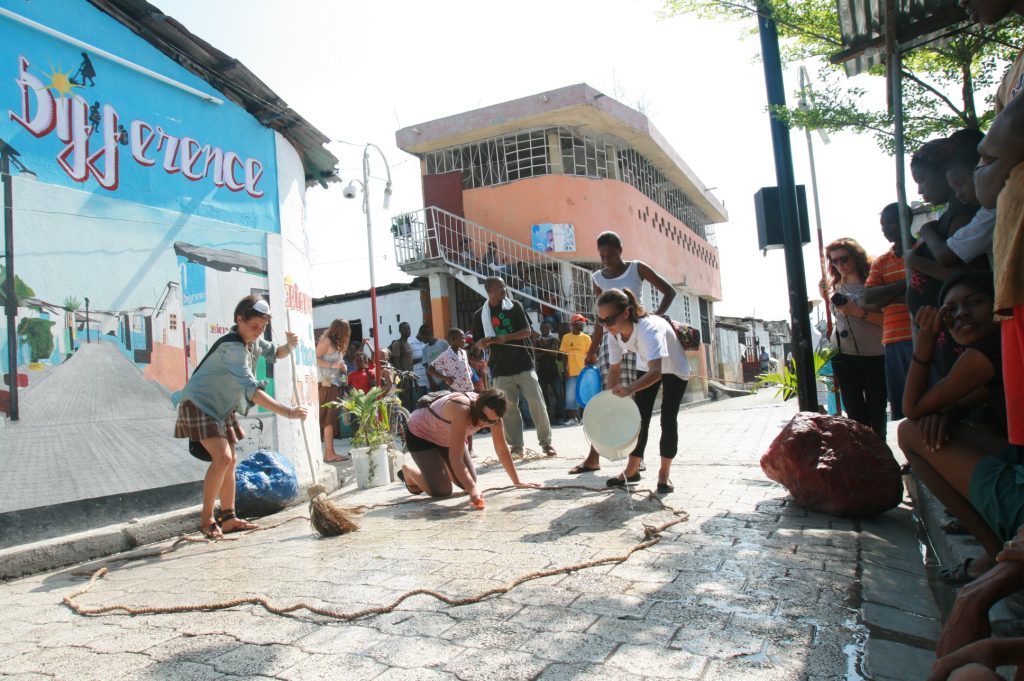
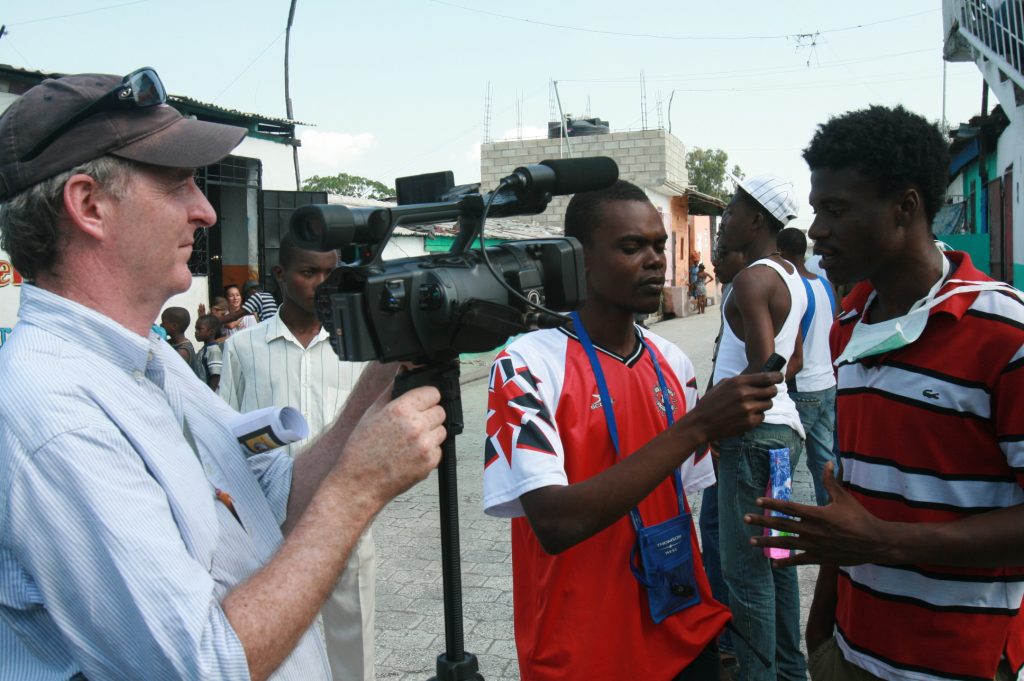

Today, that early work has evolved into a broader movement that engages community leaders, facilitators, organizations, and institutions across Haiti.
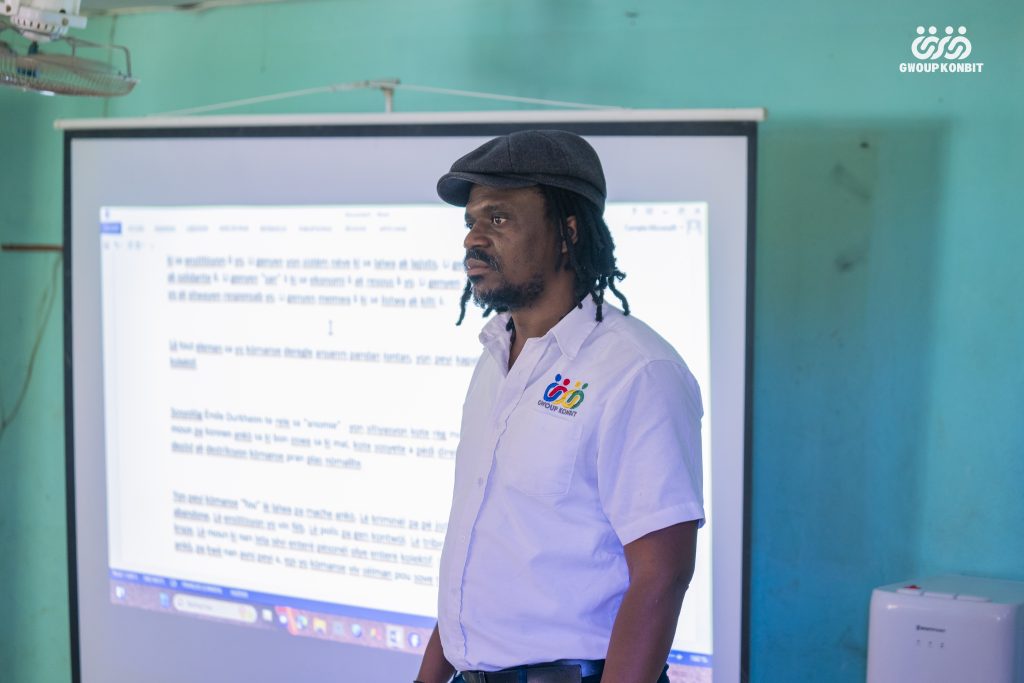
Among those helping guide the evolution of the movement are Louino Robillard, known as Robi (Class of 2013), co-founder of Gwoup Konbit, leader with Future Generations Haiti and Rasin Devlopman; Savela Jacques Berenji (Class of 2013) and Jean-Marc Lemou (Class of 2020), also leaders with Future Generations Haiti, all of whom have contributed to strengthening community-led development efforts and supporting the growth of the Konbit movement in Haiti. Together with hundreds of community leaders, facilitators, educators, and partner organizations, they have helped cultivate a network grounded in collective action, local leadership, and shared learning.
There is a unique partnership that has emerged between community organizations and academic institutions to better understand how to support community-led change. Future Generations Haiti, Future Generations University, Roots of Development, and their partners have formed a strong alliance that provides long-term support to the Konbit movement.
Their work reflects one of the central principles of Konbit itself: sustainable change is strongest when communities invest in one another and build solutions together.
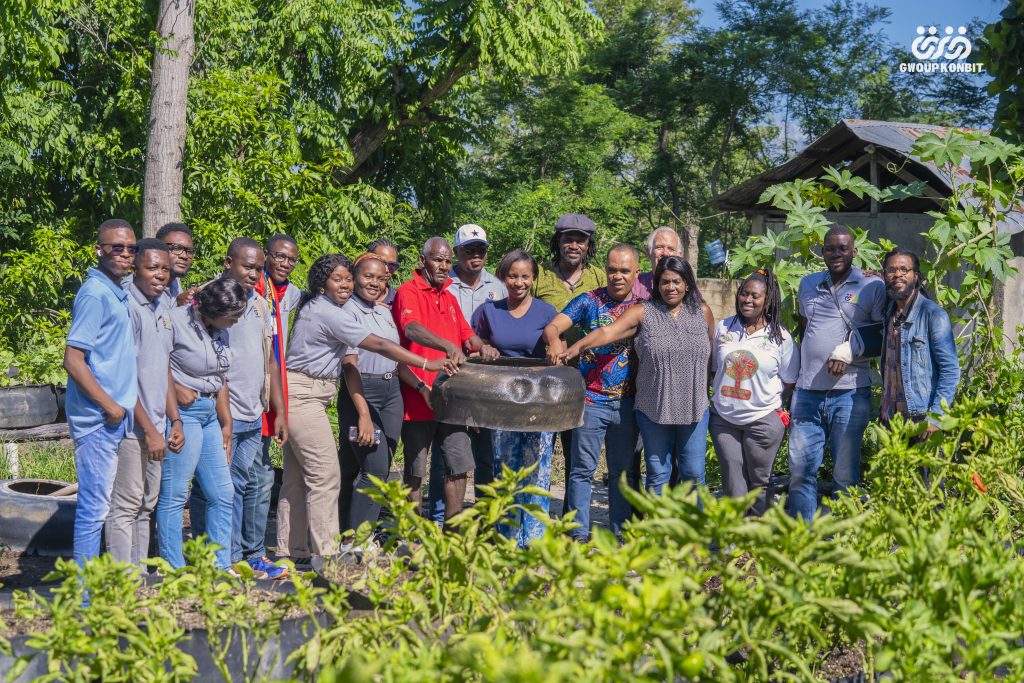
Building a Guide Through Collective Learning
The Konbit Guide was not written by a single author, organization, or institution.
Instead, it emerged through years of dialogue, field experience, reflection, and collective learning. Community leaders from across Haiti contributed stories, examples, tools, and insights drawn from their own work and lived experiences.
The resulting guide serves as both a practical resource and a statement of identity. It provides facilitators with tools and principles for supporting community development while affirming that Haitian communities possess the knowledge, leadership, and capacity necessary to shape their own development pathways.
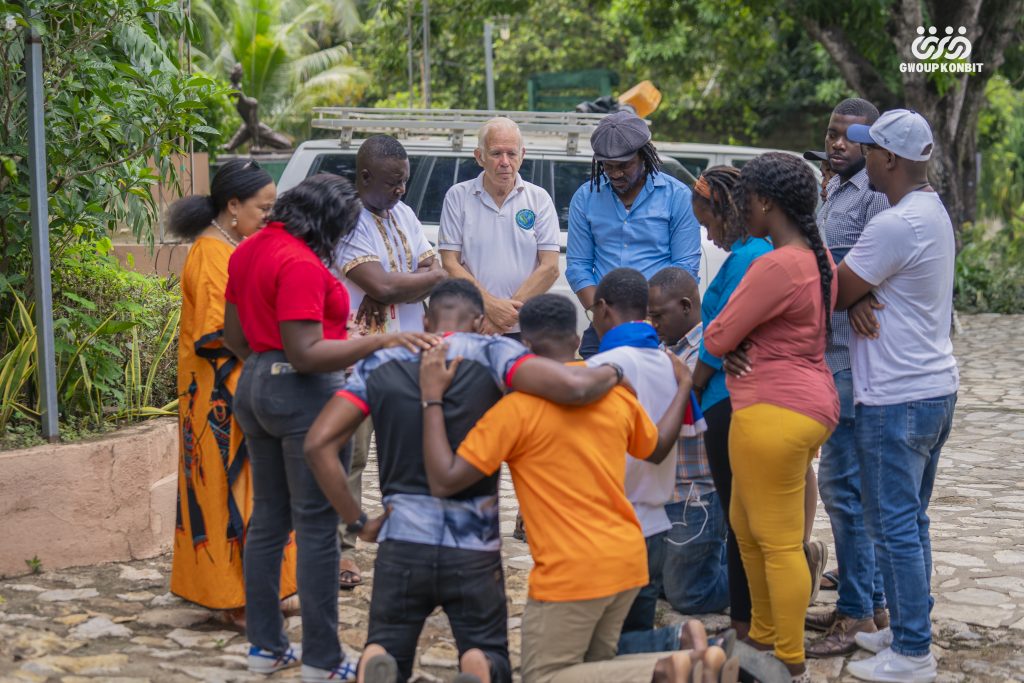
A Haitian Model for Sustainable Development
At its core, the guide argues that Konbit offers more than a cultural tradition—it offers a development framework.
The guide describes Konbit as a homegrown Haitian model for sustainable development that strengthens social cohesion, promotes civic participation, encourages local ownership, and builds resilience during times of crisis. Rather than relying primarily on external expertise or resources, Konbit emphasizes community capacity, collective problem-solving, and shared responsibility.
In a country where formal systems often struggle to meet community needs, Konbit provides a practical approach to strengthening local leadership and collective wellbeing. It demonstrates how communities can mobilize their own knowledge, relationships, and resources to address challenges ranging from agriculture and education to health, infrastructure, and environmental stewardship.
For Haiti, this is particularly significant. The guide offers a development model rooted not in imported theories, but in Haitian culture, experience, and practice.
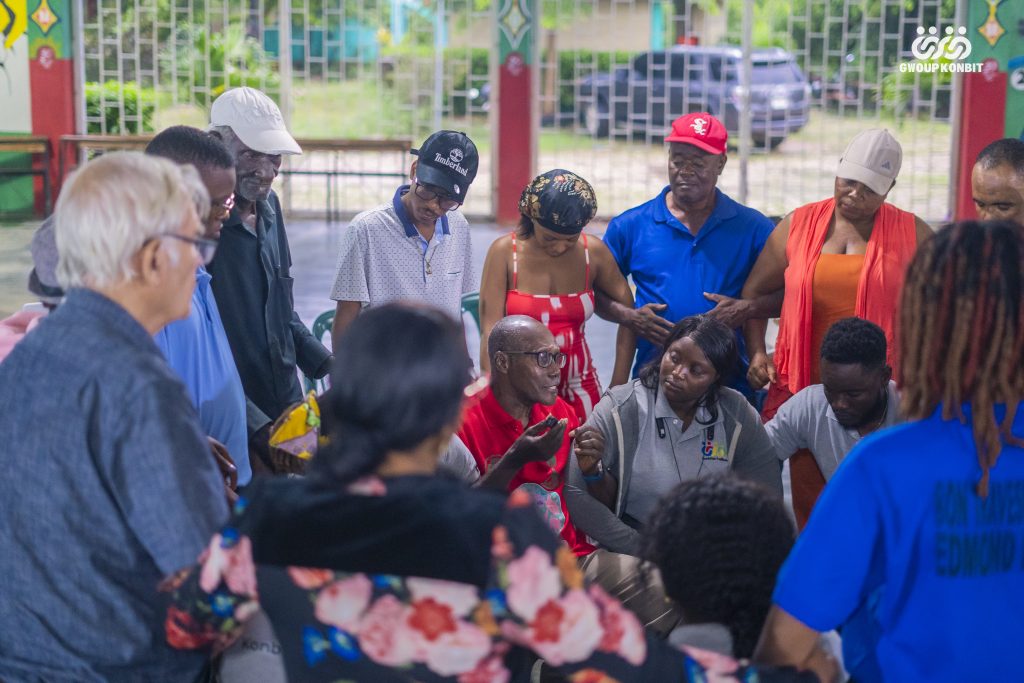
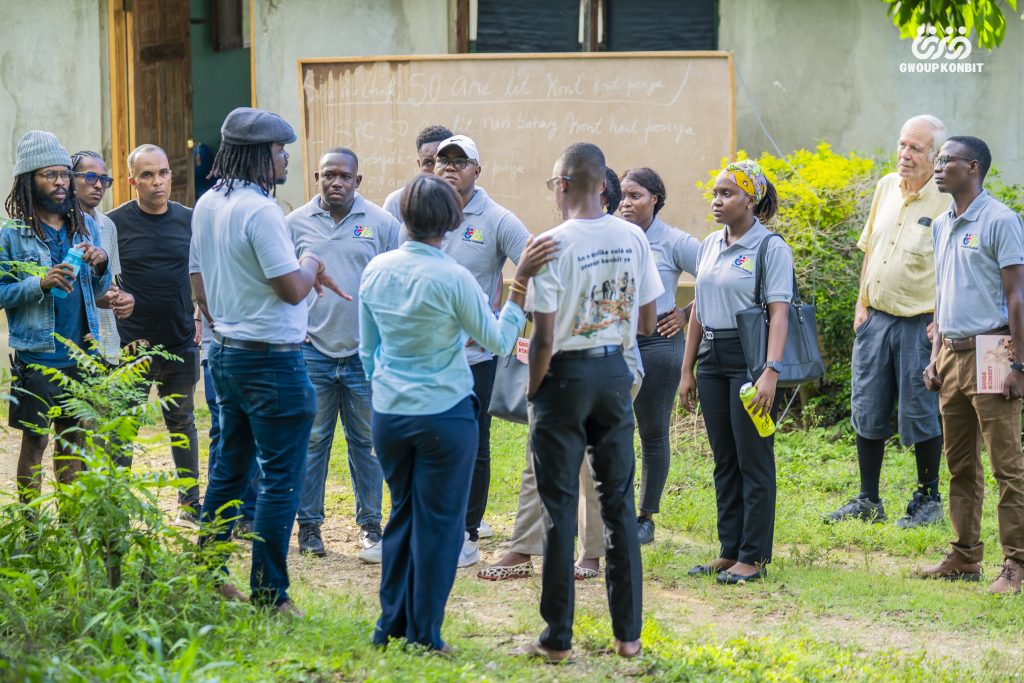
The Values That Sustain Konbit
The guide identifies five core values that form the foundation of Konbit:
- Participation
- Responsibility
- Solidarity
- Reciprocity
- Collaboration
These values are not presented as abstract ideals. Rather, they are described as practices that shape everyday community life and make collective action possible.
Together, they create the social foundation that enables communities to organize, solve problems, support one another, and sustain efforts over time. In an increasingly individualistic world, the guide argues that these values remain essential for building stronger, more resilient communities.
Investing in the Next Generation of Facilitators
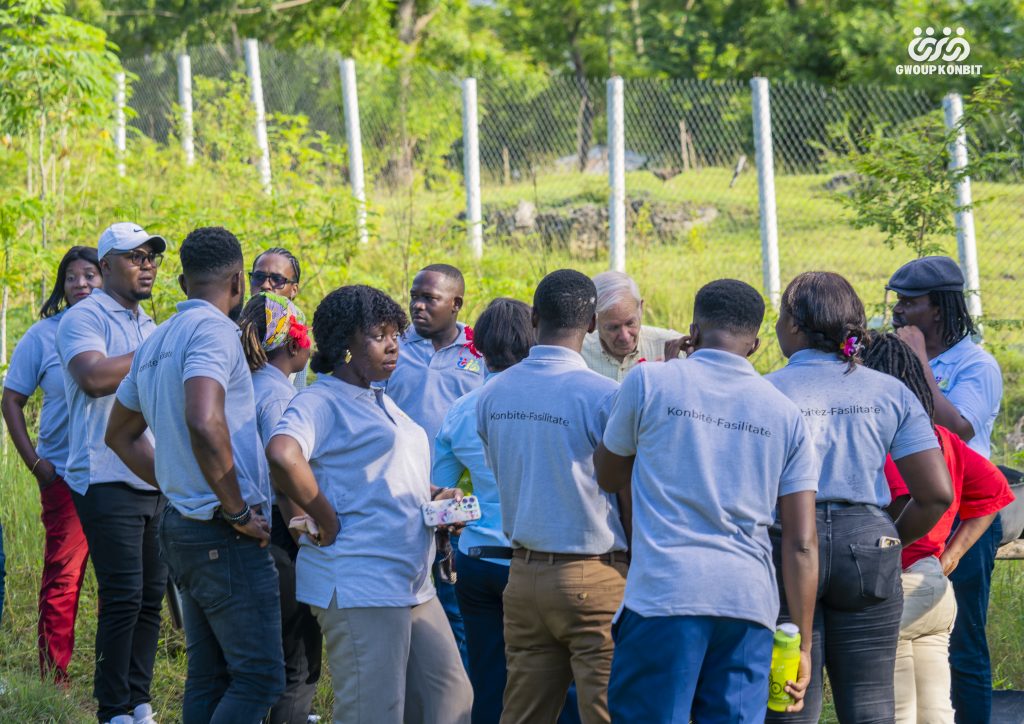
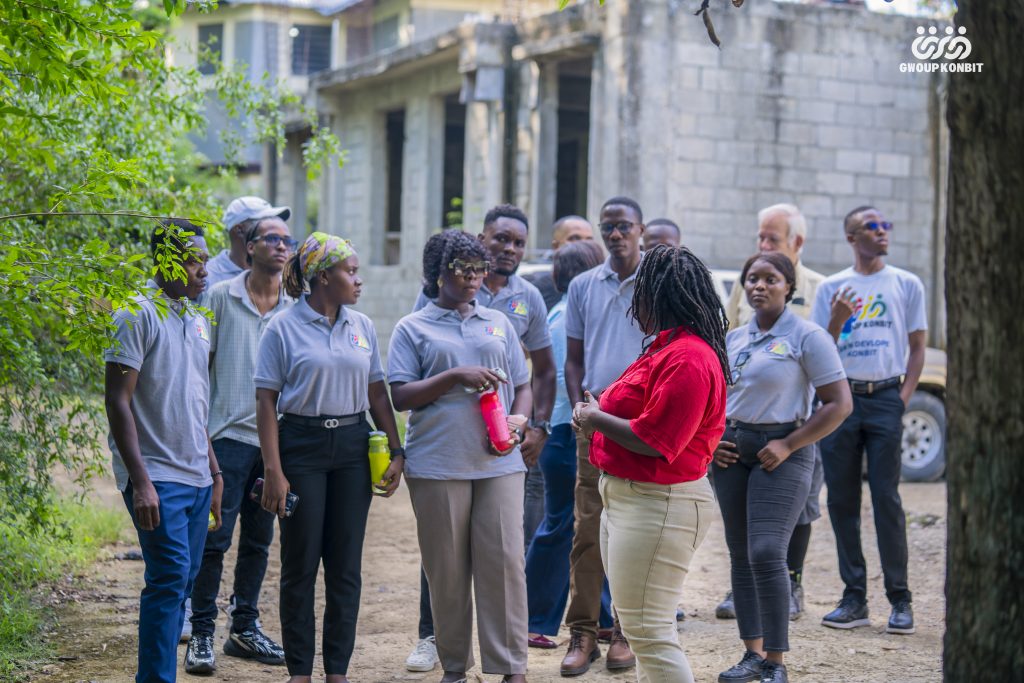
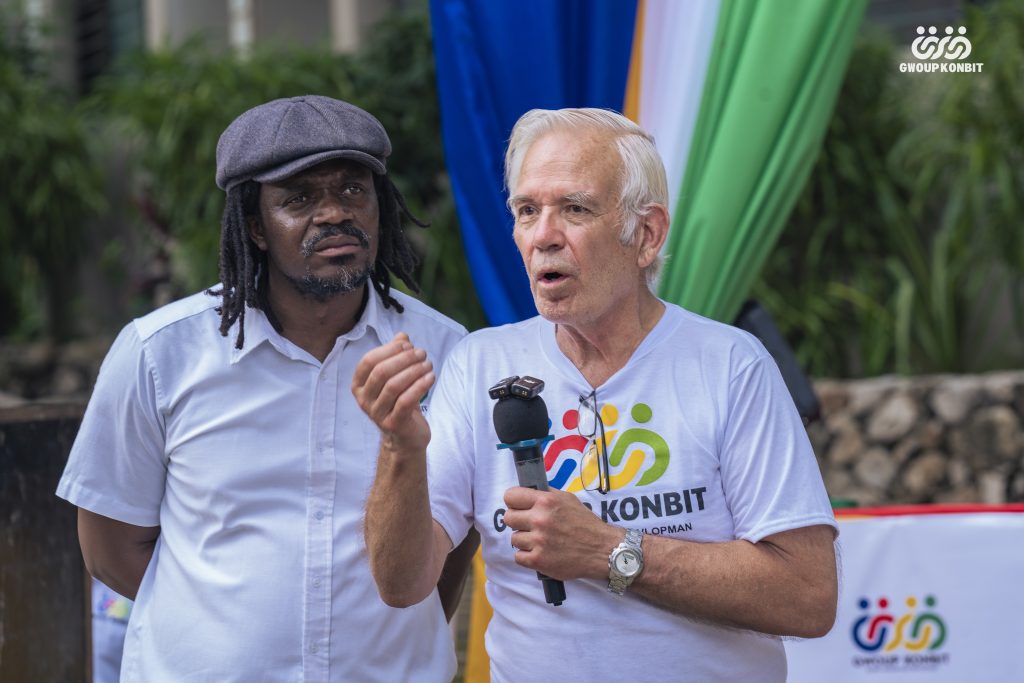
A major component of the launch week was a three-day facilitator training held at Mouvman Peyizan Papay, which is the oldest and one of the most prominent grassroots farming movements in Haiti. Participants from multiple regions gathered to deepen their understanding of the guide’s principles, methods, and practical applications.
The training focused on far more than learning how to use a manual. Participants explored leadership development, movement building, facilitation skills, reflection, and strategies for strengthening community ownership.
Through discussions, exercises, and peer learning, facilitators considered how the guide could support their work while remaining adaptable to the diverse realities of communities across Haiti.
The training reinforced an important lesson: communities do not need outsiders to solve problems for them. What they often need are opportunities to strengthen existing capacities, connect with one another, and build upon their own successes.
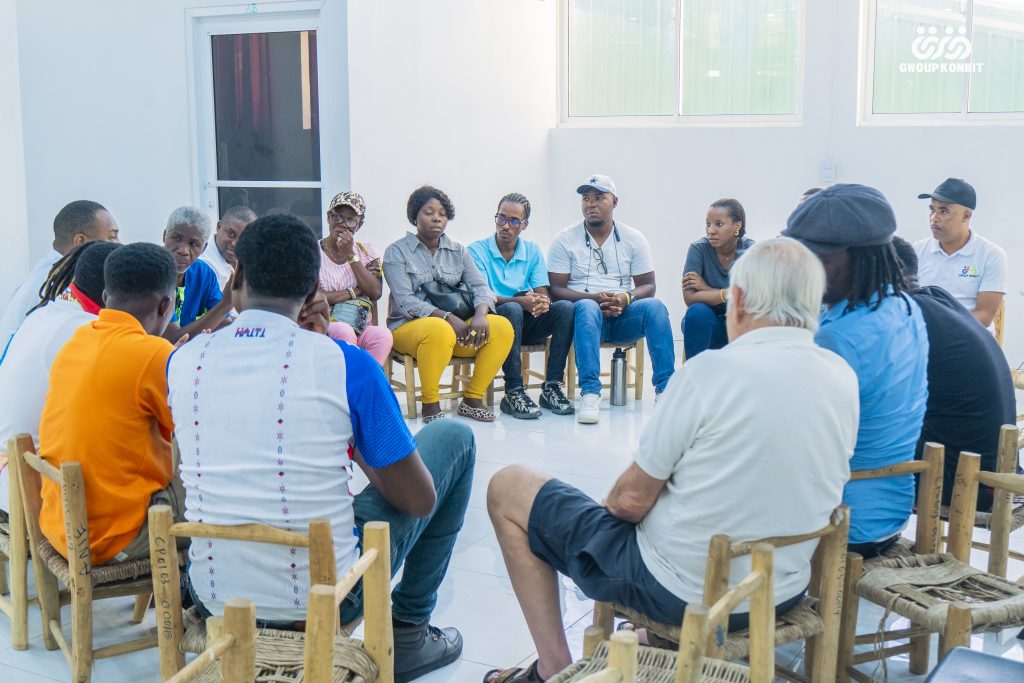
From Philosophy to Practice
One of the guide’s strengths is its ability to translate values into action.
Its final chapter outlines a practical framework for organizing collective action, including identifying shared objectives, building leadership, mobilizing participation, developing action plans, implementing activities, evaluating progress, and celebrating achievements.
In this way, the guide transforms the spirit of Konbit into a practical process that communities can adapt to address local priorities. It demonstrates that community-led development is not simply an aspiration—it is a practice that can be learned, strengthened, and replicated.
Development as Relationship
Throughout the week, conversations repeatedly returned to themes of trust, leadership, and local ownership.
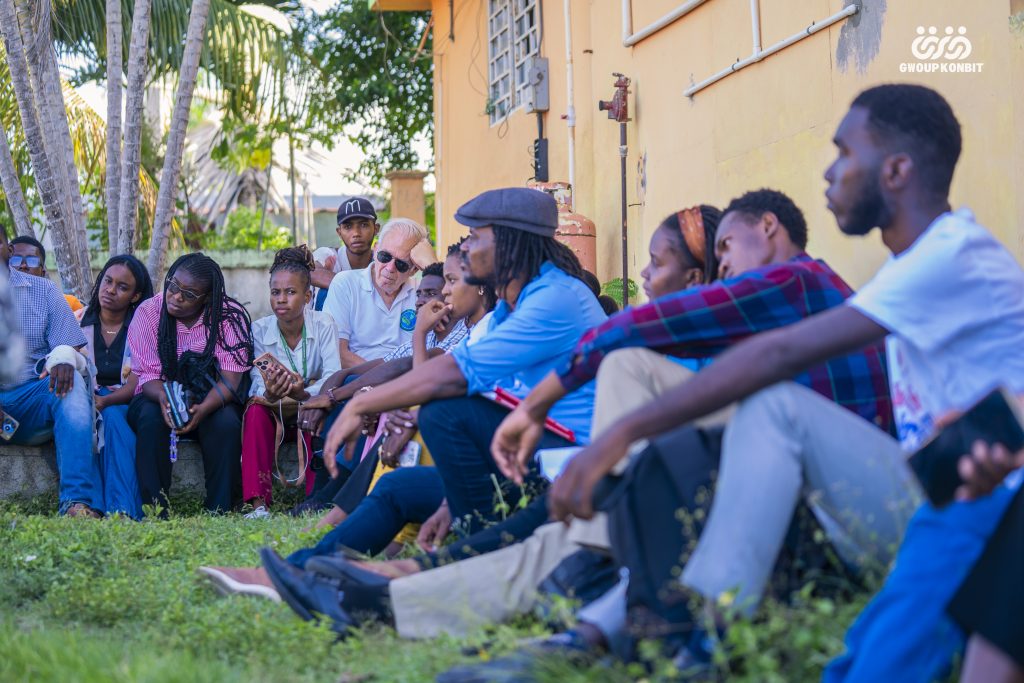
Meetings with respected Haitian leaders, including Chavannes Jean-Baptiste and Harry Nicolas, provided opportunities to reflect on the conditions that allow movements to survive and grow over time. Participants explored how leadership is cultivated, how trust is built, and how collective action can create social transformation.
These conversations reinforced one of the guide’s central messages: development is fundamentally about relationships.
Strong communities are built through networks of trust, mutual accountability, shared purpose, and collective action. The Konbit tradition provides a framework for nurturing those relationships and translating them into meaningful change.
A Return to Witness What Communities Have Built
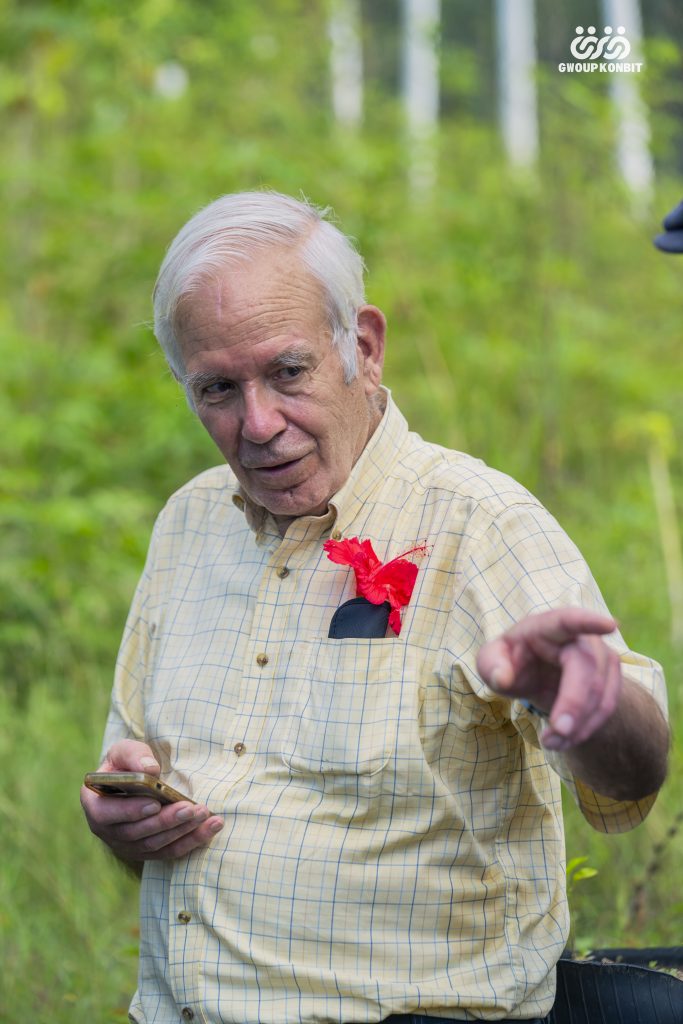
The launch was further enriched by the presence of Dr. Daniel Taylor, founder and former president of Future Generations University, whose relationship with Haiti spans decades.
For 15 years, the Konbit movement has demonstrated remarkable endurance, resilience, and determination. While local leaders were helping shape Konbit as a philosophy and a social contract for collective well-being, Daniel already encouraged the team to think about methodology, evidence, learning, and the partnerships needed to scale the movement. He helped bring a scientific lens to a movement deeply rooted in Haitian culture and community practice.
For many participants, his visit provided an opportunity to reflect on the journey from the early days of Konbit Soley Leve to the vibrant network of leaders gathered for the launch of the Konbit Guide. Throughout the week, conversations often returned to a shared question: what allows communities to sustain change over time?
The launch highlighted how a new generation of Haitian leaders has adapted, expanded, and strengthened ideas through their own experience, relationships, and commitment to their communities. Rather than marking the culmination of a project, the event demonstrated the continued growth of a movement increasingly shaped by Haitian leadership, local knowledge, and collective action.
Why the Konbit Guide Matters
The significance of the Konbit Guide extends far beyond the publication itself.
The guide arrives at a time when many Haitians are searching for pathways toward greater resilience, local ownership, and collective problem-solving. Rather than looking outward for solutions, it invites communities to rediscover and strengthen a tradition that has helped Haitians organize, survive, and build together for generations.
At a time when development efforts are often defined by external expertise and short-term projects, the guide offers a different perspective. It begins not with what communities lack, but with what they already possess: relationships, leadership, knowledge, culture, and the capacity to work together.
The guide provides a framework for identifying strengths, mobilizing resources, and creating change from within communities rather than relying exclusively on external solutions.
In this sense, it serves both as a practical tool and as a hopeful vision for Haiti’s future.
It demonstrates that development can be rooted in Haitian values. It affirms that communities can learn from one another. And it recognizes that the knowledge required to create meaningful change often already exists within the people most affected by the challenges.
Looking Forward
As participants returned to their communities across Haiti, they carried more than copies of a guide. They carried new relationships, renewed commitments, and a shared vision for strengthening community-led development throughout the country.
The story of the Konbit Guide is ultimately not the story of a publication.
It is the story of hundreds of leaders choosing to learn together, work together, and build together. It is the story of a movement that continues to grow while remaining grounded in the values that inspired its beginning.
Most importantly, it is a reminder that Haiti’s future will not be written by a guide alone. It will be shaped by the communities, leaders, and citizens who continue to bring the spirit of Konbit to life every day.

Tribute to Sabina C. Robillard
The late Sabina C. Robillard, class of 2013 alumna, made significant contributions to this journey. Although she is not here to witness this important milestone, her impact on the Konbit movement and on the Guide Konbit process will never be forgotten.
Within the Konbit movement, Sabina is remembered as a “Konbitèz Papiyon” (Butterfly Konbiter). In Konbit philosophy, people who dedicate themselves to collective well-being do not simply disappear; they transform. Their ideas, values, and contributions continue to live on through the people they inspired and the work they helped build.
As we celebrate this achievement, it is important to remember those who helped lay the foundation but are no longer physically with us. Sabina was one of those people. Her belief in the movement, her encouragement, and her contributions remain part of the Guide Konbit story. Her legacy continues to fly with us, and her contribution will always be remembered.
What can other communities learn from Haiti’s experience?
The Konbit Guide reminds us that lasting change is rarely created by individuals working alone. It emerges when people come together around a shared vision, build on local strengths, and invest in one another over time.
As Future Generations University continues to support community-led development around the world, we invite readers to reflect on their own communities: What traditions, values, and practices already exist that could serve as foundations for positive change?
Sometimes the most powerful solutions are the ones communities already carry within them.