
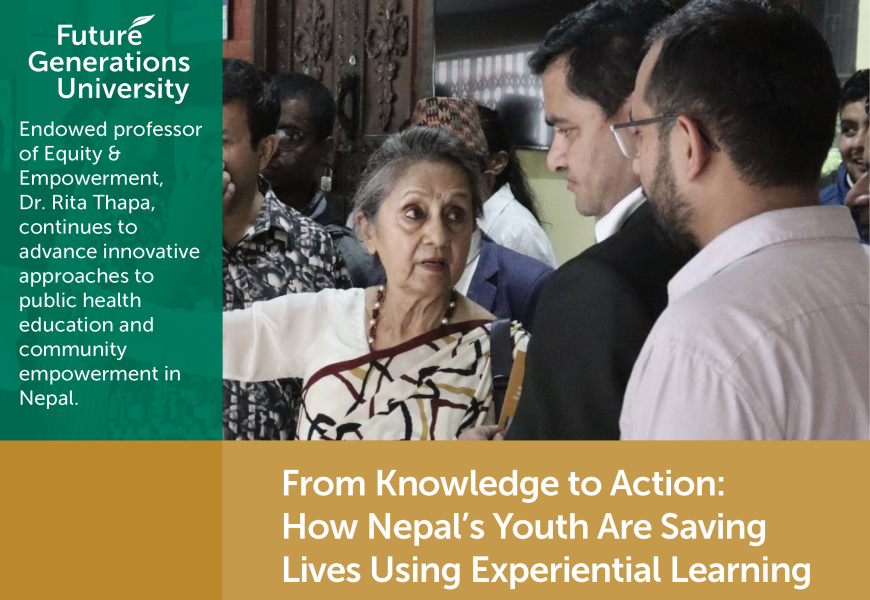
At Future Generations University, education is rooted in the belief that meaningful learning happens not only through theory but through experience, reflection, and action within communities. This philosophy is reflected in the work of endowed professor of Equity & Empowerment (Public Health) Rita Thapa, whose leadership in Nepal continues to advance innovative approaches to public health education and community empowerment.
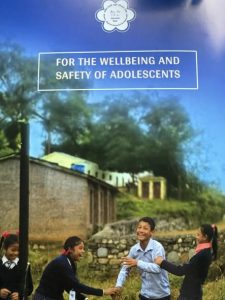
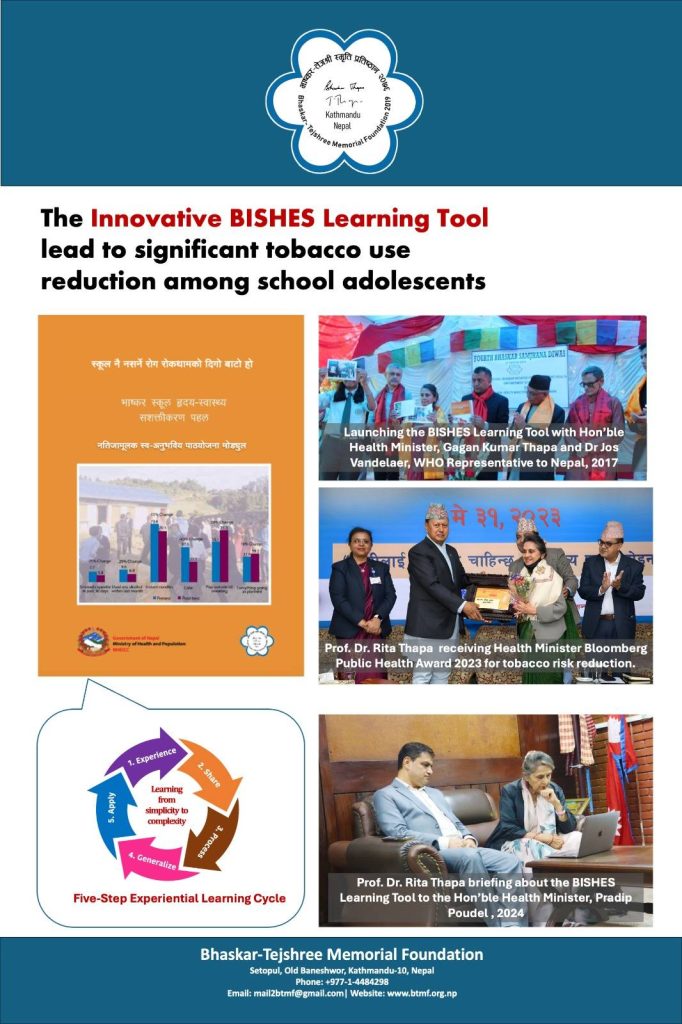
A new impactful example of this work is the Bhaskar Initiative for School Heart-Health Empowerment Studies (BISHES), a program designed to help young people better understand the causes and prevention of non-communicable diseases through experiential learning and community-centered education which won the prestigious Health Minister Bloomberg Public Health Award 2023 (HMBPHA).
A Lifelong Dedication to Community Health
Dr. Daniel Taylor came to know Dr. Thapa in 1969 through her work on Nepal’s maternal and child health and family planning program. Dr. Thapa signed the Alma-Ata Declaration on behalf of Nepal at the 1978 International Conference on Primary Health Care. Years later, she was keynote speaker at the 40th Anniversary of the Alma-Ata Declaration at the Johns Hopkins School of Public Health. Dr. Thapa has worked in several WHO offices, earning the role as first woman Department Director for WHO’s South East Asia Office. She received several honors for her commendable contributions to public health.
Today, in her role as endowed professor of Equity & Empowerment, Dr. Thapa advises Future Generations University’s Sharing Histories approach in the Barun Valley. This project, locally administered by The East Foundation, promotes healthy behaviors, raises awareness on public health issues in maternal and child health, nutrition, and safe motherhood.
The origins of BISHES are deeply personal. The initiative was established in memory of the late Dr. Bhaskar B. Thapa, who died from a heart attack at the age of 49. In response to this personal tragedy, the initiative seeks to prevent similar losses by promoting awareness, healthier behaviors, and early prevention among youth.
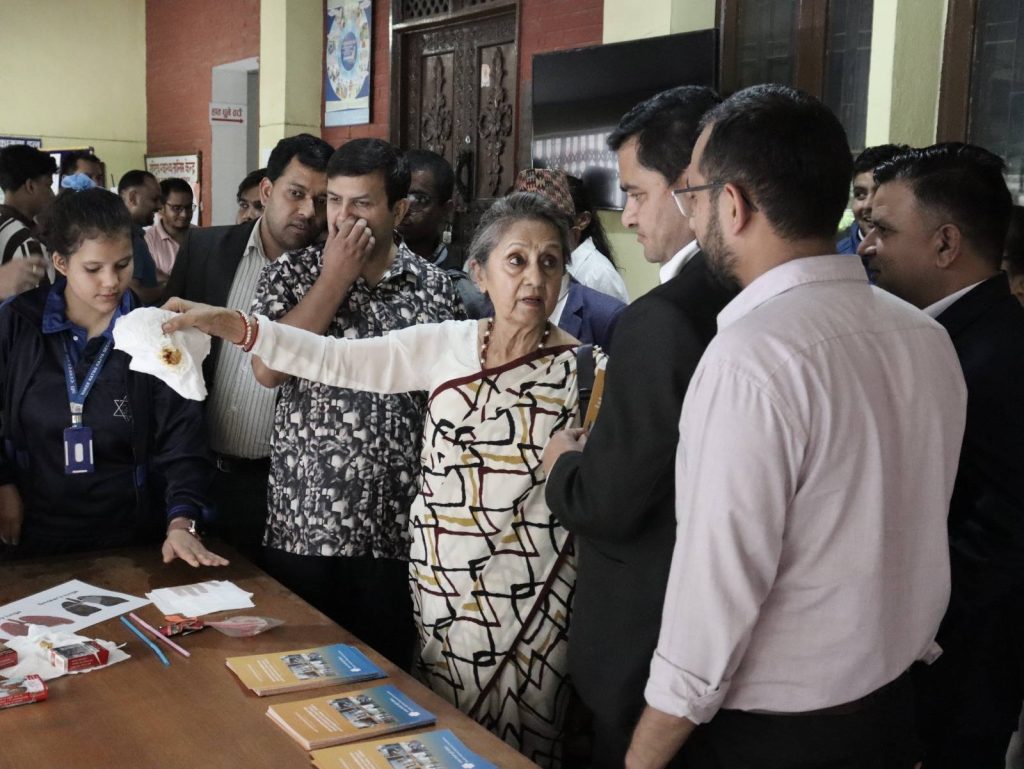
Faced with the grief of losing a child to a preventable health condition, she transformed that loss into a commitment to help other families avoid similar tragedies. What began as a mother’s determination to understand how unhealthy behaviors contribute to cardiovascular disease evolved into a national effort to equip young people with the knowledge, skills, and experiences needed to make healthier choices throughout their lives. As Dr. Thapa reflects, the guiding hope behind BISHES has always been simple: that no other parents should have to endure the same pain her family experienced.
What distinguishes BISHES from many traditional health education approaches is its emphasis on experiential learning. Rather than relying solely on lectures or memorization, the program engages students directly in practical activities, demonstrations, reflection exercises, and dialogue. Students are encouraged to actively experience concepts, discuss their observations, connect lessons to their own lives, and identify ways they can apply this knowledge within their communities.
At the center of the program is the Five-Step Cycle of Experiential Learning, a framework that guides how learning activities are designed and facilitated. This cycle moves students from passive observation toward critical thinking and action-oriented learning.
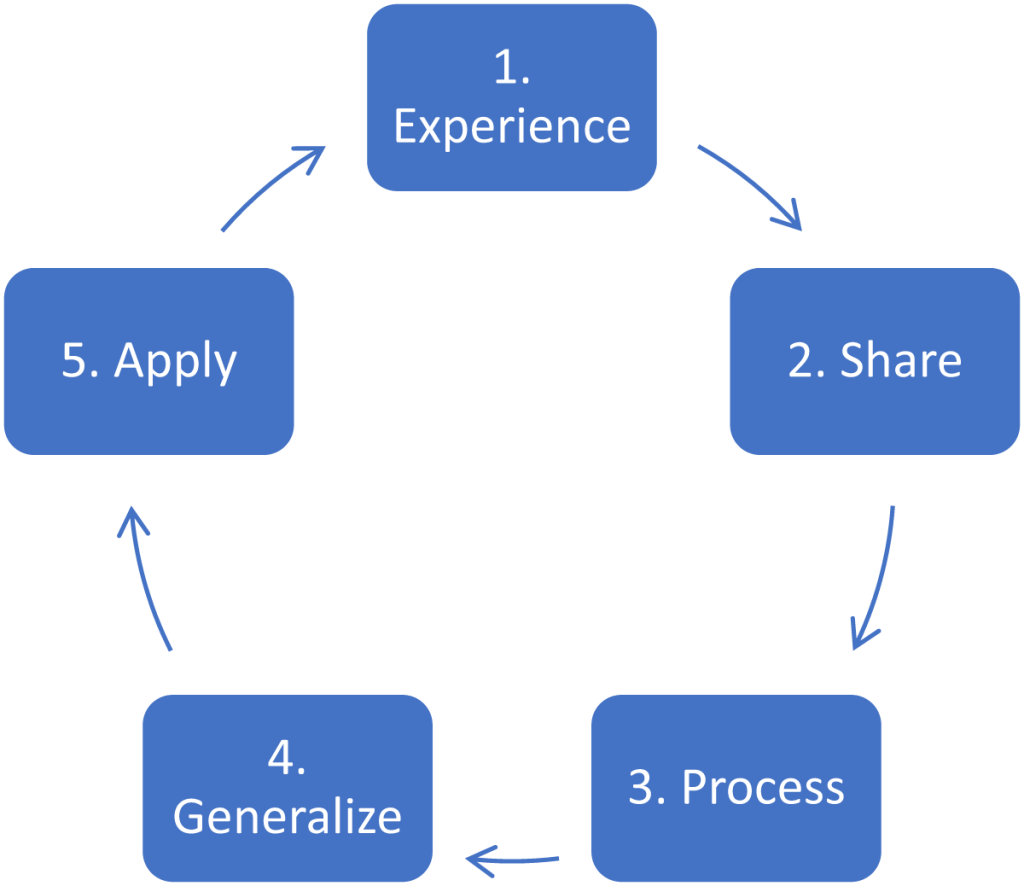
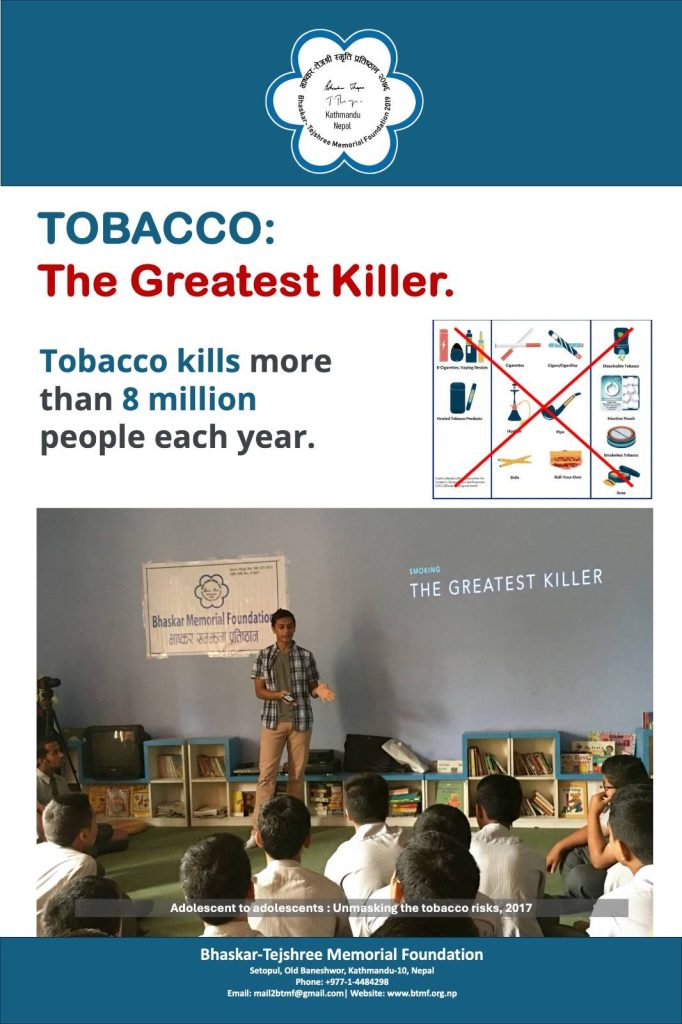
The first step is the Experiential Step, where students directly participate in an activity or demonstration that introduces a concept in a tangible and memorable way. Instead of beginning with abstract scientific explanations, students first encounter a real experience that sparks curiosity and emotional engagement. In one activity focused on tobacco awareness, students use bottles, smoke, and simple classroom materials to simulate how cigarette smoke affects the lungs and breathing capacity. In another exercise, students physically experience the difficulty of breathing through a straw after simulated tobacco exposure. These activities create an immediate and personal understanding of the health impacts being discussed.
The second step is Experience Sharing, where students discuss what they observed, felt, or noticed during the activity. This stage allows participants to openly reflect on their reactions and compare experiences with one another. Rather than being told what to think, students are encouraged to articulate their own insights and questions.
The third step is Processing, where facilitators help students explore the scientific or social meaning behind the experience. At this stage, teachers connect students’ observations to evidence-based explanations about cardiovascular health, nicotine addiction, nutrition, physical activity, or disease prevention. Scientific concepts become easier to understand because they are grounded in something students have already experienced personally.
The fourth step is Generalizing, which encourages students to connect what they learned to broader real-life situations. Students begin examining how these issues appear within their schools, homes, communities, and society more broadly. This stage helps learners recognize patterns and understand how personal choices connect to larger public health challenges.
The final step is Application, where students identify actions they can take moving forward. This may involve changing personal habits, encouraging healthier choices among peers and family members, or becoming advocates for healthier lifestyles within their communities. The emphasis is not simply on knowledge acquisition, but on practical behavior change and community engagement.

Connecting Experiential Learning with SEED-SCALE
This learning process reflects many of the core values emphasized within Future Generations University and the SEED-SCALE framework: building on local strengths, encouraging participation, fostering critical reflection, and supporting sustainable change from within communities themselves. Students are not treated as passive recipients of expert knowledge. Instead, they become active participants in understanding problems and identifying solutions relevant to their own lives and contexts.
The growth and impact of BISHES have not been achieved by one individual or organization alone. As the initiative expanded from pilot testing to broader implementation, it was strengthened through the commitment and collaboration of numerous partners. Dr. Thapa credits the Ministry of Health and Population (MoHP), the Ministry of Education, Science and Technology (MoEST), the Center for Education and Human Resource Development (CEHRD), local mayors and ward chairpersons, school principals, teachers, students, the World Health Organization (WHO), and the Nick Simons Foundation for helping transform BISHES from a personal vision into a nationally recognized approach to health promotion. Their collective support has enabled experiential learning to reach young people across communities and schools throughout Nepal.
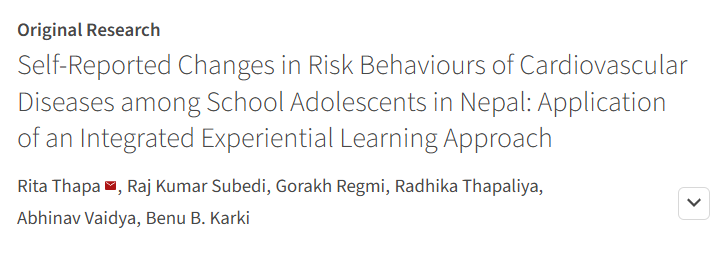
One of the most powerful lessons from BISHES emerged during the early pilot testing of the experiential learning modules. After participating in a tobacco-awareness activity using the “Smoking Bottle” demonstration, students asked if they could borrow the device to take home. When facilitators asked why, the students explained that they wanted to show their parents firsthand how smoking affects the lungs. Rather than keeping the lesson within the classroom, students became educators within their own families and communities. Their enthusiasm spread beyond the intervention schools as they shared the demonstrations and discussions with relatives, friends, and neighbors, creating conversations about healthy behaviors far beyond the original participants. This experience reinforced one of the central principles of BISHES: when young people learn through experience, they become active agents of change rather than passive recipients of information. Read about the Pilot in the peer-reviewed Global Heart Journal, 21, May 2020, that featured BISHES’ original research.
Community-Led Education for Lasting Health Outcomes
Much like the framework that Future Generations University teaches, BISHES demonstrates that lasting change occurs when communities build on local strengths, learn through experience, and become active participants in creating their own solutions
The BISHES initiative also highlights the importance of collaboration between schools, communities, educators, and public health institutions. The program works with teachers, local stakeholders, and health professionals to support long-term behavioral change and broader community awareness. By integrating experiential learning into schools, the initiative creates opportunities for health education to move beyond isolated lessons and become part of everyday community conversations.
Importantly, BISHES demonstrates how locally grounded educational models can address global challenges. Non-communicable diseases are increasing rapidly across many countries due to changing diets, urbanization, reduced physical activity, and tobacco consumption. Yet many prevention campaigns struggle because information alone is often not enough to influence long-term behavior. BISHES addresses this challenge by helping students emotionally connect with the material through direct experience, reflection, and discussion.
The program reflects Rita Thapa’s broader commitment to applied learning and community-centered leadership. Her work demonstrates how education can become a tool not only for transmitting information but for empowering individuals and communities to make informed decisions, strengthen resilience, and improve collective wellbeing.
Learning, Leadership, and the Future of Public Health
Communities around the world continue facing increasingly complex health challenges and initiatives like BISHES offer an important reminder: lasting change often begins not with top-down instruction, but with people experiencing, questioning, discussing, and applying knowledge together. Through experiential learning, young people are not simply learning about health—they are learning how to become active participants in shaping healthier futures for themselves and their communities.
As the burden of non-communicable diseases continues to rise in Nepal and around the world, Dr. Thapa believes the solution must begin long before treatment is needed. BISHES demonstrates that community-level action through schools can reduce risk behaviors, promote healthier lifestyles, and create lasting change across generations.
She encourages educators, health professionals, policymakers, and community leaders to advocate for and expand evidence-based behavior-change approaches such as experiential learning. Echoing the words of the late Professor Carl E. Taylor, Dr. Thapa reminds us that behavior change is often “the best medicine.” By investing in prevention, empowering young people, and creating opportunities for communities to learn through experience, we can build healthier futures for generations to come.